Pieter Coecke van Aelst
1502–1550 · Southern Netherlands · Renaissance, Flemish art
The story
In 1533 a Flemish painter talked his way to Constantinople on a sales trip. Pieter Coecke van Aelst had been sent by a Brussels tapestry firm to interest Sultan Suleiman the Magnificent in a set of costly woven hangings. The sale fell through, but Coecke came home with sketchbooks full of the city, its people and its processions, which years later his widow turned into a printed frieze of woodcuts, over 14 feet long, showing the customs of the Turks.
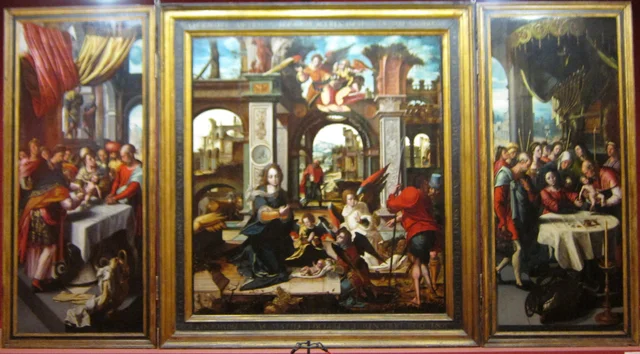
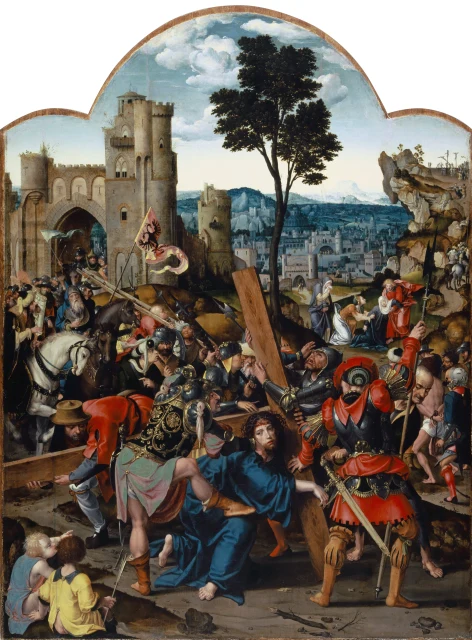
Coecke was that kind of restless all-rounder. He painted altarpieces, designed tapestries and stained glass, and served as a court painter to the emperor Charles V. His deepest mark, though, was in print. He translated the architectural treatises of the Italian Sebastiano Serlio into Dutch, French and German, carrying the new Renaissance style over the Alps to builders in the north.
He also ran a large Antwerp workshop, and one of his pupils was a young Pieter Bruegel. Bruegel later married Coecke's daughter Mayken. Coecke did not live to see it. He died in 1550, and the marriage came 13 years after.