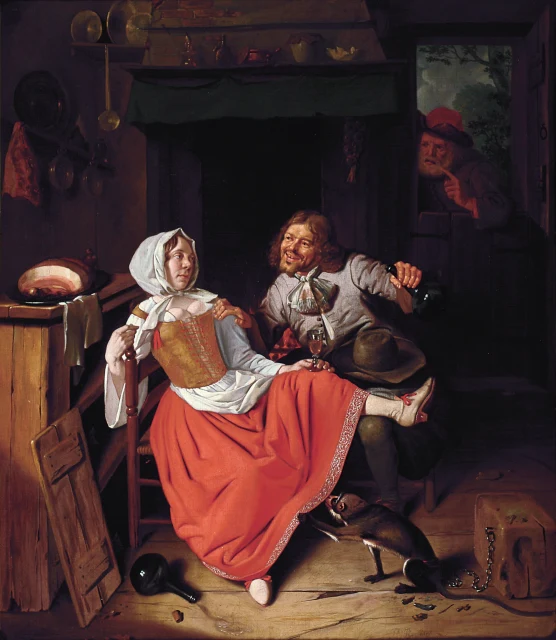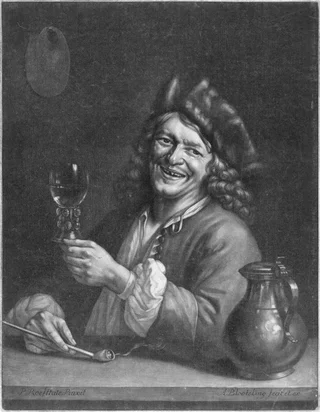
Pieter Gerritsz van Roestraten
1630–1700 · Dutch Republic · Dutch Golden Age, Baroque
The story
When Pieter van Roestraten settled in London by the mid-1660s, he could paint a fine portrait, and that worried Peter Lely, a painter trained in Haarlem who had become the leading portraitist at the court of Charles II. According to Arnold Houbraken, the 18th-century Dutch biographer of artists, the two men made a bargain. Lely would introduce the newcomer to the king and to rich collectors, and Roestraten would leave portraits alone. He seems to have kept his word. Apart from his self-portraits, no later portraits by him are known.
He had trained in Haarlem, where he was baptised in 1630. From 1649 he studied with Frans Hals, the city's great portrait painter, and in 1654 he married Hals's daughter Adriaentje. In London he turned to costly still lifes of silver, Chinese porcelain, skulls and hourglasses, painted for an aristocratic clientele and full of polished surfaces that catch the light. In a vanitas in the Royal Collection, a glass ball hanging above the table reflects a room and a figure that is probably the painter himself.
He was injured during the Great Fire of London in 1666 and walked with a limp for the rest of his life. He died in London in 1700.