Pieter Lastman
1583–1633 · Dutch Republic · History painting, Dutch Golden Age, Baroque
The story
For about six months around 1624 a teenager from Leiden shared a busy Amsterdam studio, learning how to build a picture from a painter twice his age. The teenager was Rembrandt. The teacher was Pieter Lastman, and much of what Rembrandt did next started here.
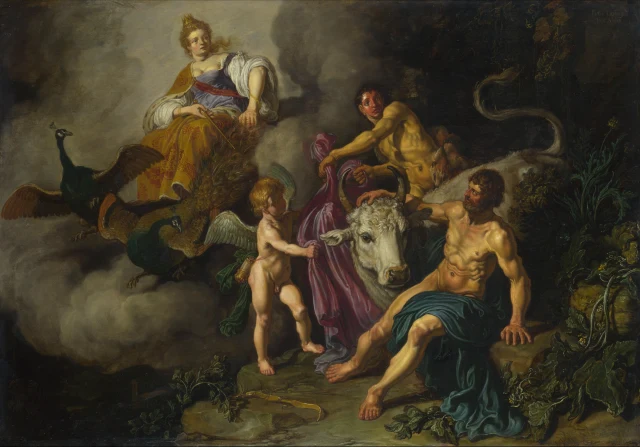
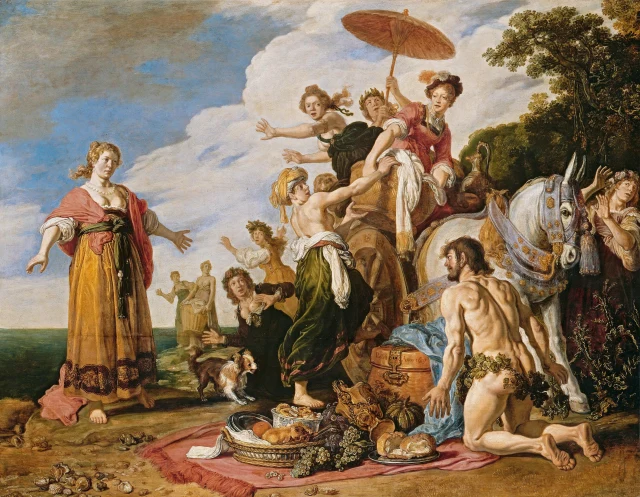
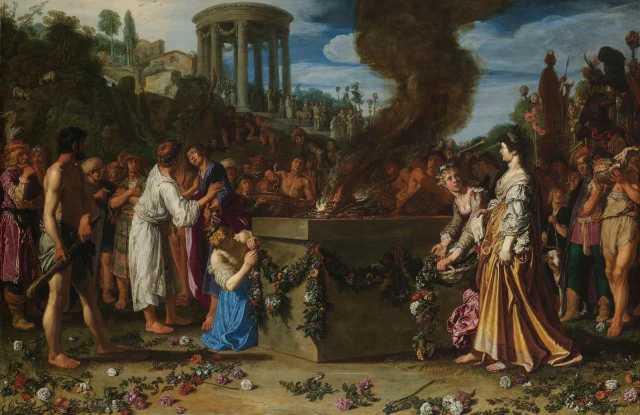
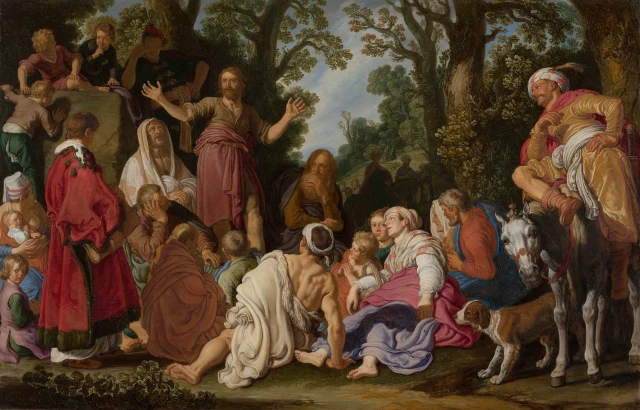
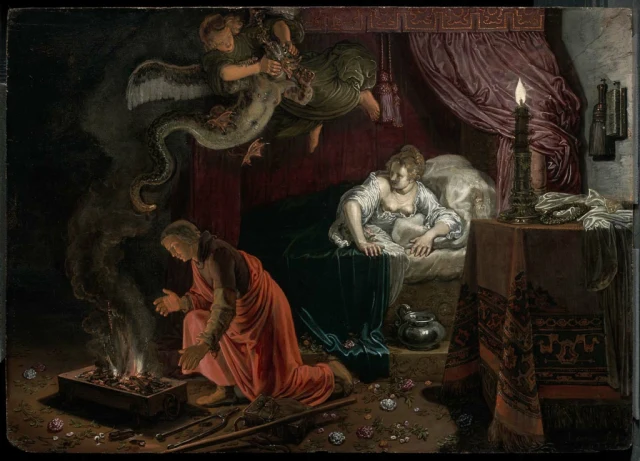
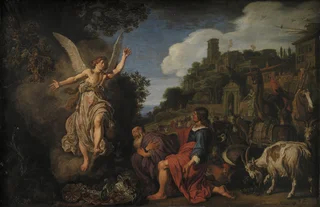
Lastman had done the one thing his famous pupil never would: he went to Italy. In Rome around 1605 he fell in with the German painter Adam Elsheimer, a master of small, glowing night scenes, and absorbed the hard-edged drama of Caravaggio, then the talk of the city. Back in Amsterdam he became the leading painter of history pieces, crowded biblical and classical moments full of gesture, rich costume and pointing hands, staged like scenes from a play.
That taste for the charged dramatic instant is exactly what the young Rembrandt took away, along with a way of throwing strong light across a face. Because Rembrandt never crossed the Alps himself, the Italian warmth in his early work came secondhand, through the older man's eye. Lastman worked on in Amsterdam until his death in 1633, and the busy, gesturing biblical crowds he specialised in turn up again, transformed, in Rembrandt's earliest history paintings.