Pieter van Mol
1599–1650 · Habsburg Netherlands · Baroque, History painting
The story
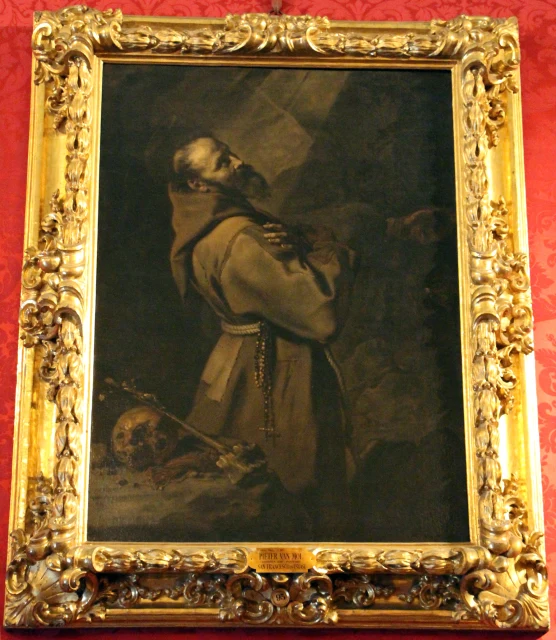
For most of its life in Florence, the Saint Francis in the Palatine Gallery at the Pitti was a Rubens. It entered the Medici collection late in the 17th century, among the pictures of Grand Prince Ferdinando, the heir to Tuscany, and the scholars who catalogued Rubens kept the name on it. One of them dated it to the master's years in Italy. The connoisseur Ludwig Burchard rejected the attribution, and Hans Vlieghe, who was cataloguing Rubens's saints, confirmed that rejection in 1972. A cleaning then brought up a signature in capitals at the lower left: P. VMOL.
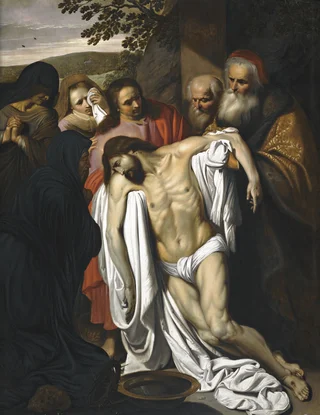
That is Pieter van Mol, born in Antwerp in 1599 and apprenticed for 11 years to an obscure local painter, Zeger van den Graeve, before the city's guild of Saint Luke made him a master in 1623. Rubens dominated Antwerp painting in those years, and van Mol worked inside that manner, with the same deep colour and heavy bodies.
Around 1631 he moved to Paris and went further there than most Flemish painters did. Louis XIII made him peintre ordinaire du roi in 1637, and Queen Anne of Austria gave him the same title in her own household five years later. When the French crown founded its Académie royale de peinture et de sculpture in 1648, van Mol was one of the 12 original members, and he died in Paris two years after that. The confusion about his hand runs in both directions. Paintings by Artus Wolffort, an older Antwerp painter whose manner was close to his, have at times been reassigned to van Mol.