Pisanello
1395–1455 · Republic of Pisa · Veronese school
The story
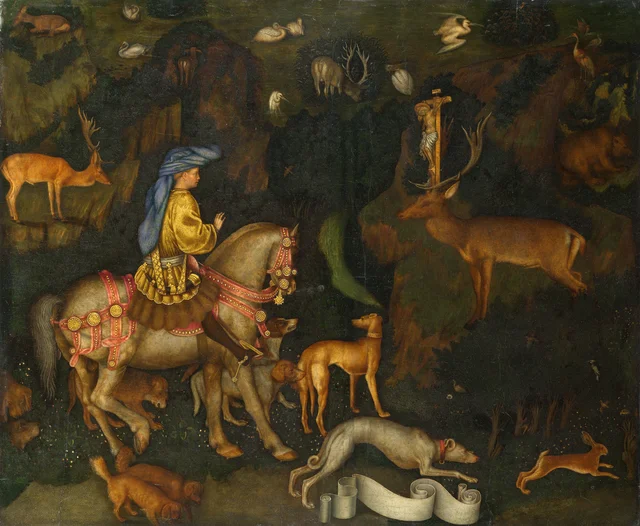
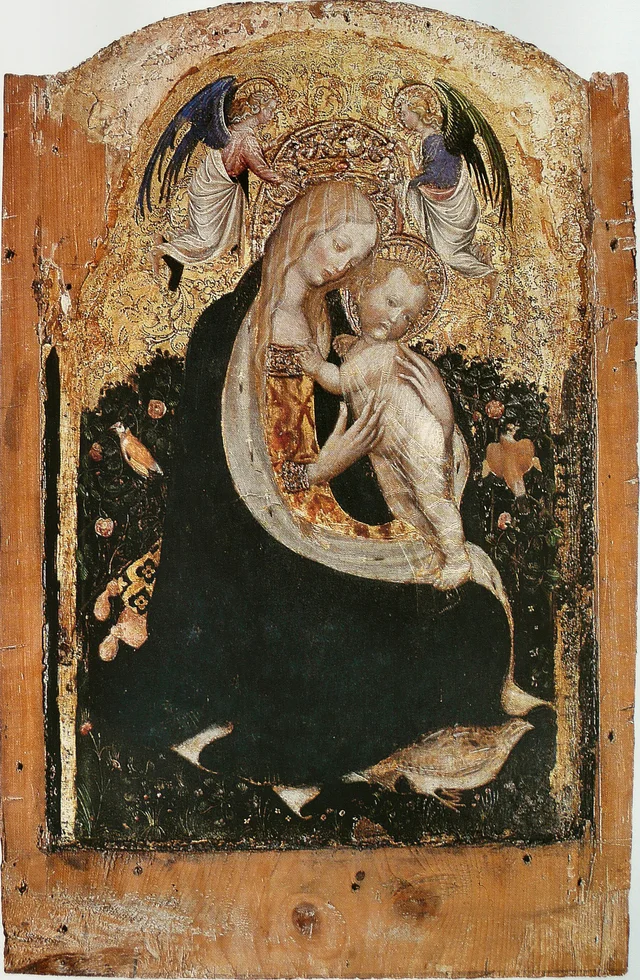
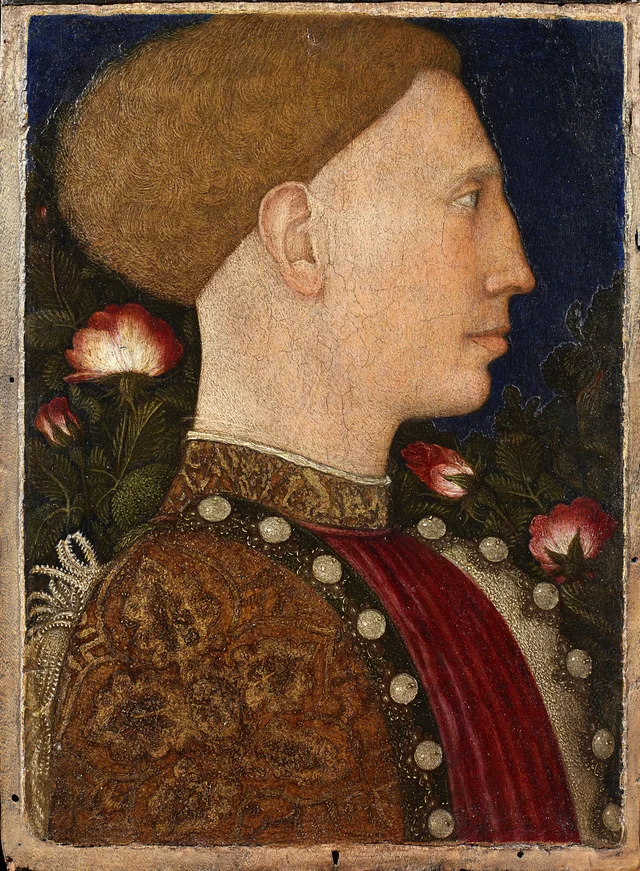
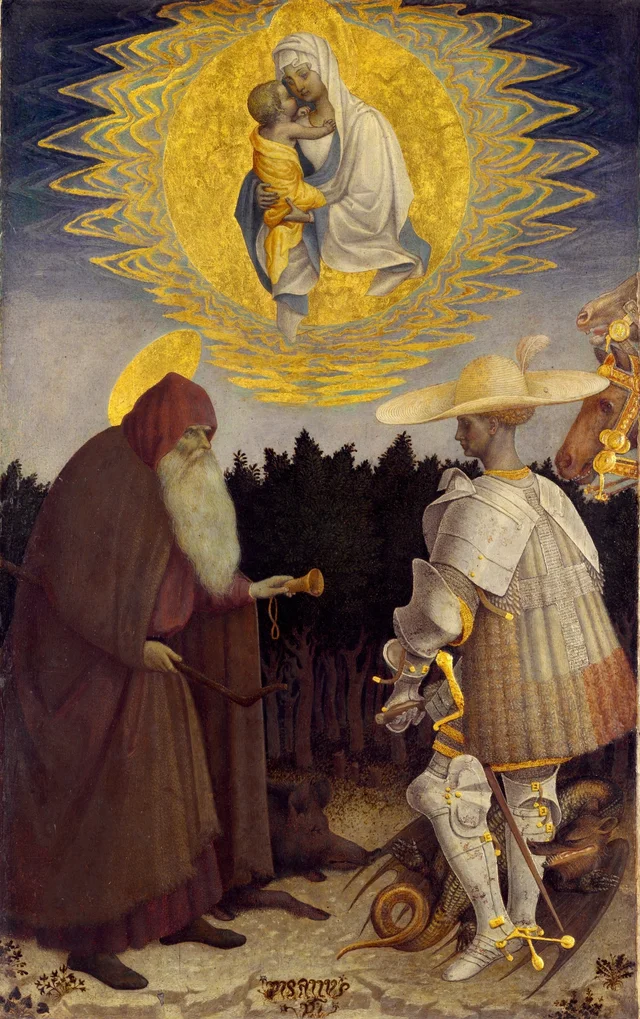
Pisanello was the artist the princes of Italy competed to keep. Working in the first half of the 15th century, he moved between the courts of Verona, Ferrara, Mantua and Naples in the last brilliant flowering of the International Gothic style, all fine detail, rich costume and chivalry. His surviving drawings of animals, birds, horses, hounds and even a hanged man, are studied so closely they seem alive on the page.
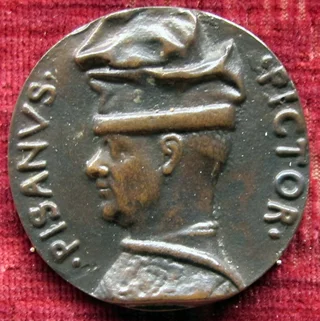
His most lasting invention was small enough to hold in a hand. Pisanello revived the portrait medal, a cast bronze disc bearing a ruler's profile on one side and a personal emblem on the other, and effectively founded a Renaissance art form that spread across Europe. His medal of the Byzantine emperor John VIII, made when that emperor visited Italy, set the fashion.
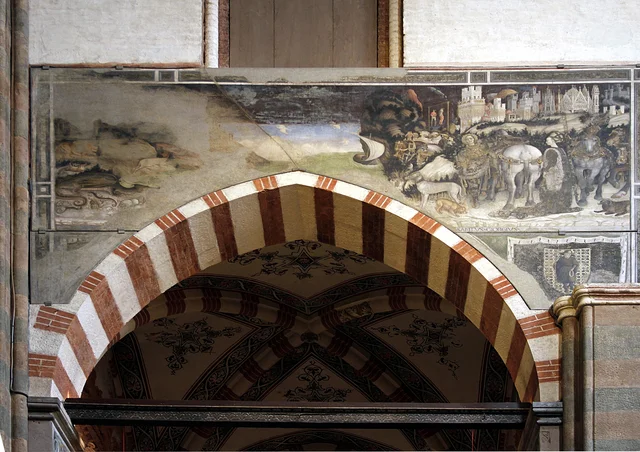
Much of his large-scale painting is lost, but a fresco survives in the church of Sant'Anastasia in Verona, a crowded, fairy-tale scene of Saint George setting off to fight the dragon, the young knight among elegant horses under a sky hung with the bodies of the dragon's earlier victims. He died around 1455, and roughly two dozen of his bronze medals survive, more durable than almost any of his paintings.