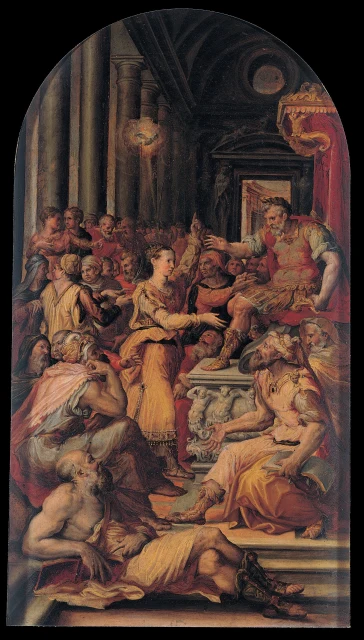
Prospero Fontana
1512–1597 · Papal States · Mannerism
The story
Prospero Fontana was one of the well-connected working painters who kept the Italian Mannerist style moving from city to city in the 16th century. Born in Bologna in 1512, he was known for how fast he painted, which made him a useful hand on big decorative jobs and took him almost everywhere the important work was.
He helped Primaticcio decorate the French royal palace at Fontainebleau, worked in Rome for Pope Julius III, who granted him a yearly pension, and joined his friend Giorgio Vasari, the painter and art historian, on the frescoes of the Palazzo Vecchio in Florence. Back in Bologna he was prominent enough to serve as the official arbitrator in disputes among local artists.
His most lasting bequest to art was his own daughter. Prospero taught Lavinia Fontana to draw and paint, and she became one of the first women in Europe to run a professional painting career and win commissions on the same terms as men. He died in Bologna in 1597.