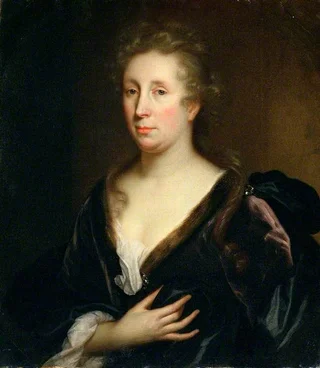
Rachel Ruysch
1664–1750 · Dutch Republic · Baroque
The story
Rachel Ruysch had an unusual advantage for a flower painter, a father who collected the dead. Frederik Ruysch was a celebrated Amsterdam anatomist and botanist whose house was crammed with preserved specimens, dried plants and exotic curiosities, and his daughter grew up drawing them.
She turned that early study into flower still lifes of extraordinary precision, dark backgrounds against which roses, tulips and grasses seem to glow, with an insect or a bead of dew placed exactly where the eye should land. Her arrangements are impossible bouquets, blooms that never open in the same season gathered into one vase, painted so carefully they can be named species by species.
Ruysch worked for more than 60 years, raised a large family, and in her forties became court painter to the Elector Palatine in Dusseldorf, one of the best-paid painters of her time regardless of sex. She once won a large sum in a state lottery. She kept painting into her eighties and signed a flower piece the year she died, 1750, still recording her age proudly beside her name.
Works
14 works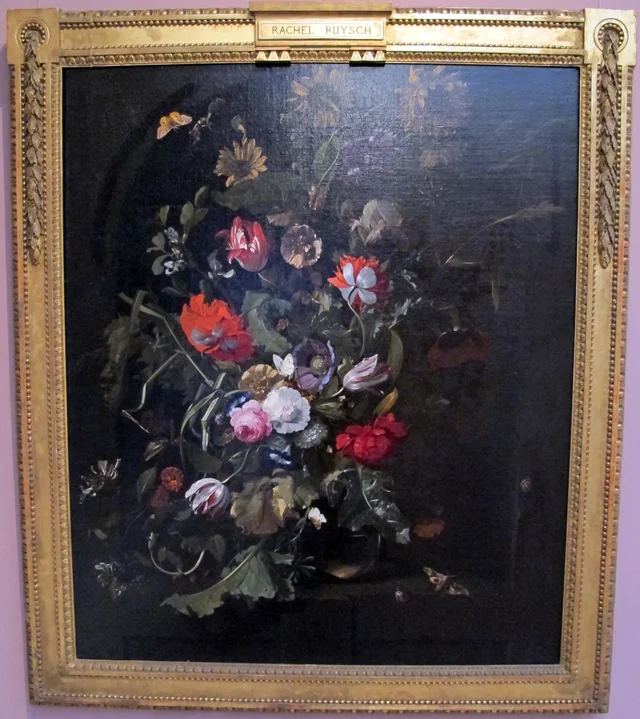 Bouquet of FlowersRachel Ruysch, 1680
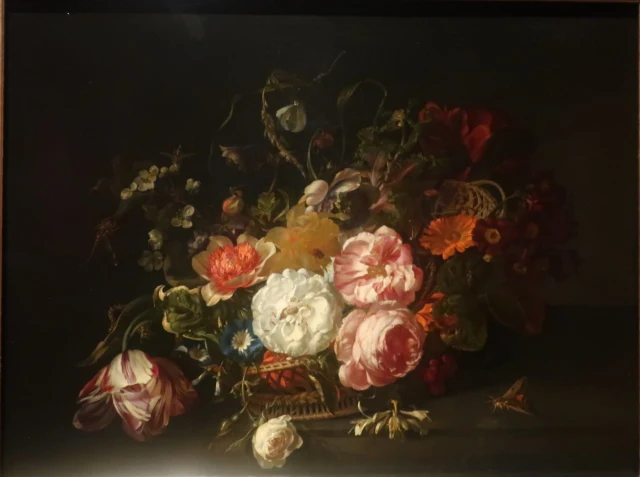 Basket of FlowersRachel Ruysch, 1711
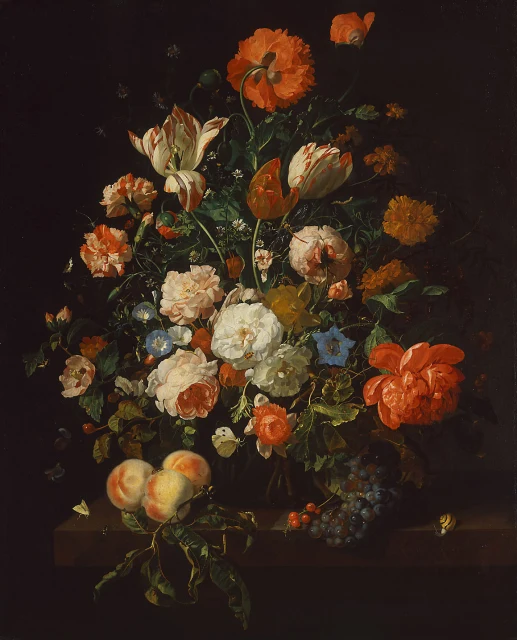 BouquetRachel Ruysch, 1706
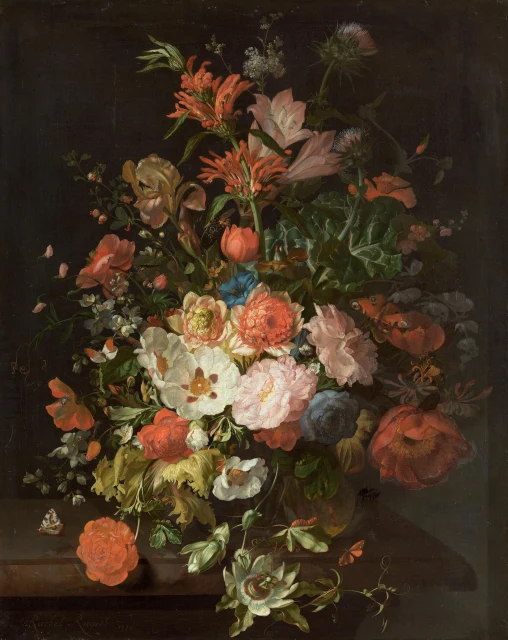 Bouquet of FlowersRachel Ruysch, 1715
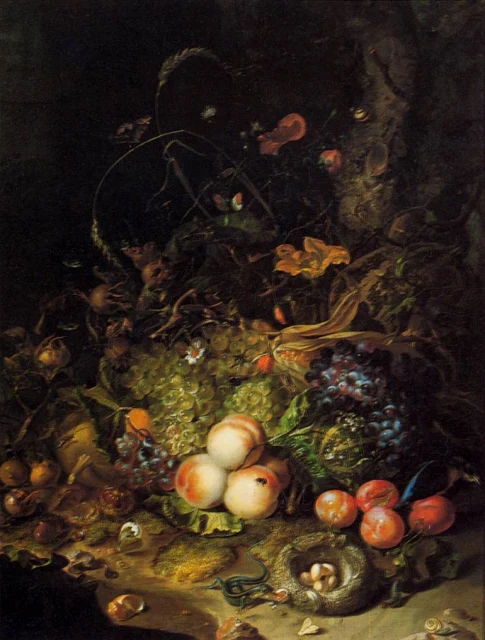 Flowers, Fruit, Reptiles and Insects on the Edge of a WoodRachel Ruysch, 1716
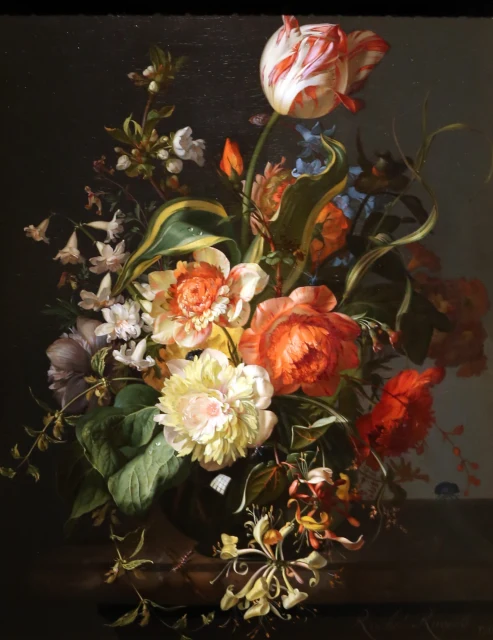 Flowers in a Glass Vase with a TulipRachel Ruysch, 1716
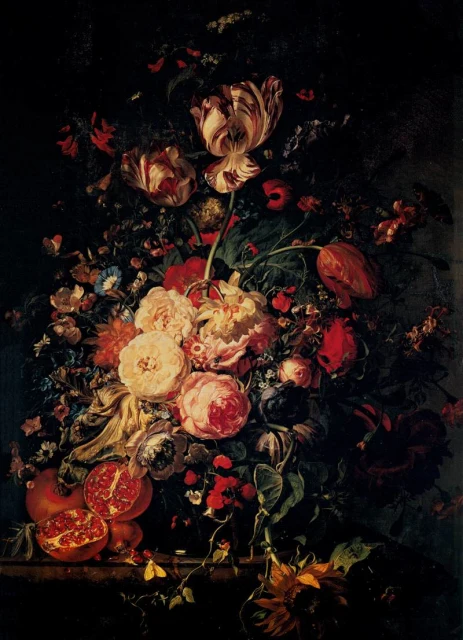 Flowers in a Glass Vase with Pomegranates on a Marble BalustradeRachel Ruysch, 1715
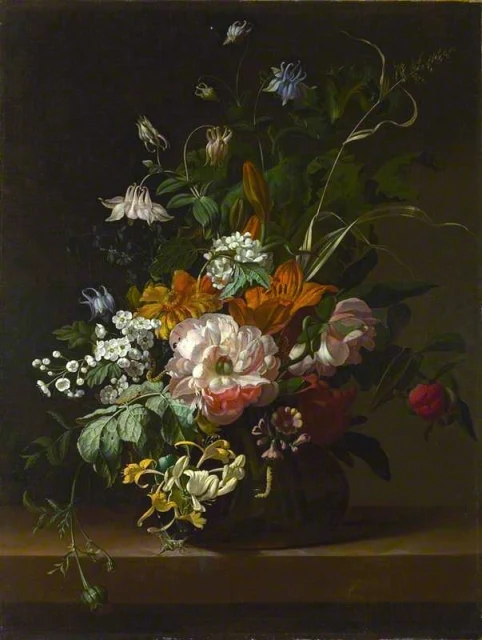 Flowers in a VaseRachel Ruysch, 1685
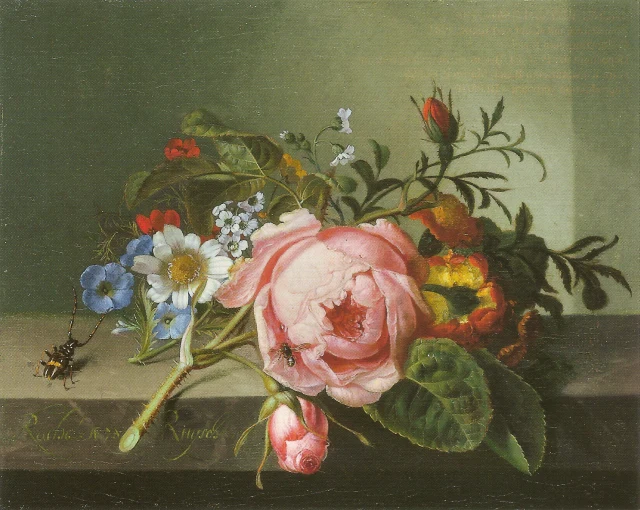 Spray of Flowers, with a Beetle on a Stone BalustradeRachel Ruysch, 1741
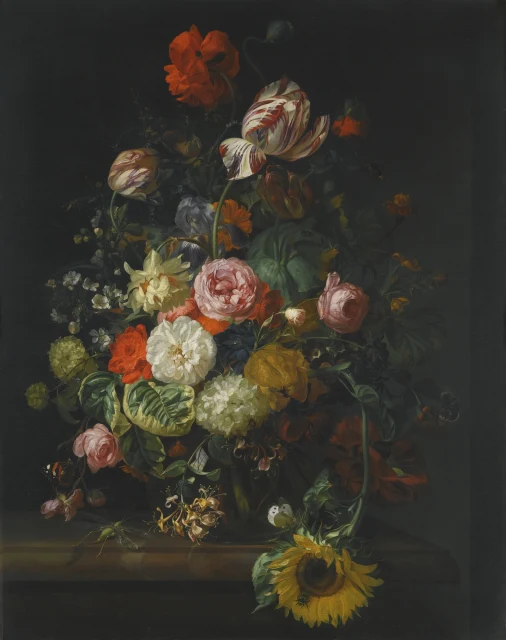 Still Life of Flowers in a Glass Vase on a Marble LedgeRachel Ruysch, 1710
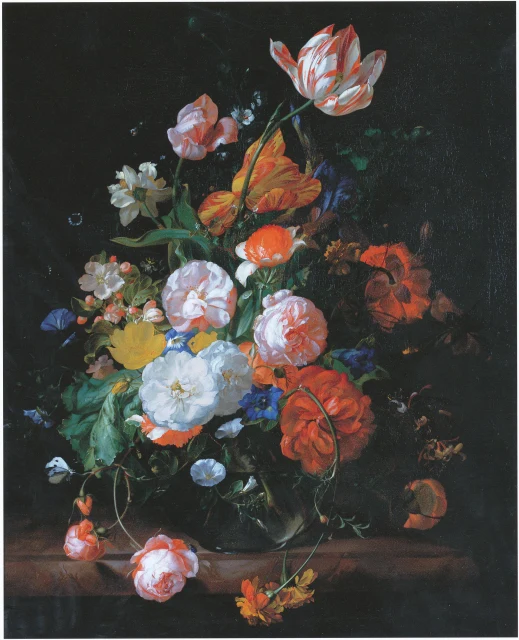 Still Life with FlowersRachel Ruysch, 1709
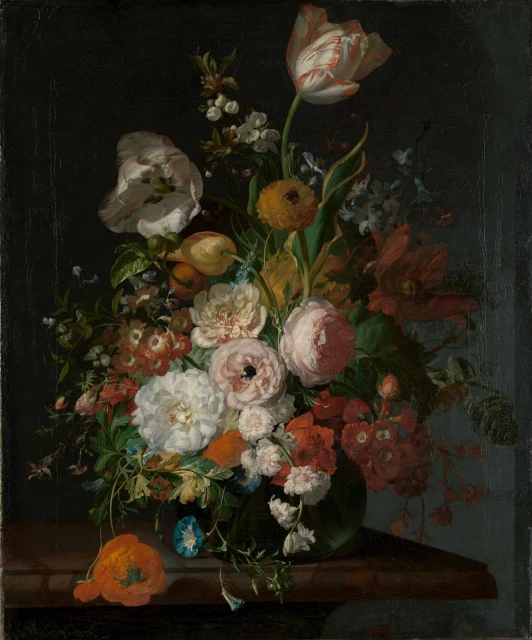 Still Life with Flowers in a Glass VaseRachel Ruysch, 1705
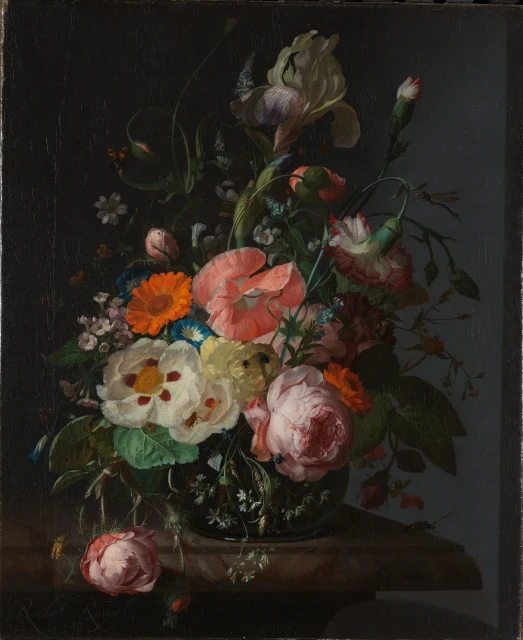 Still Life with Flowers on a Marble TabletopRachel Ruysch, 1716
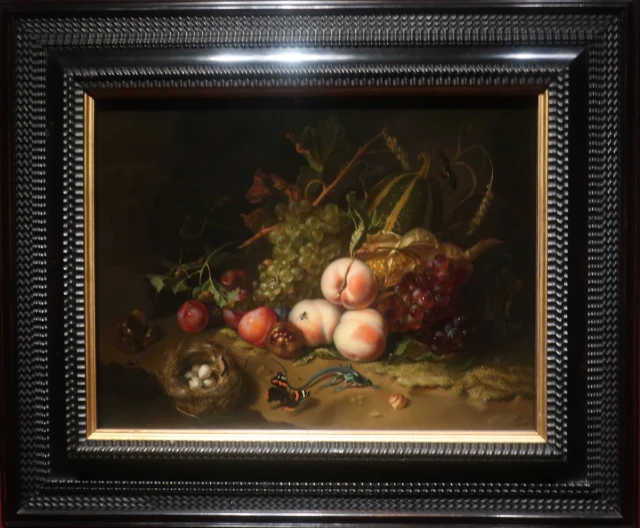 Still-Life with Fruit and InsectsRachel Ruysch, 1711