Robert Nanteuil
1623–1678 · France · Baroque
The story
In 1660 a French engraver persuaded Louis XIV to sign an edict that changed the standing of his whole craft. Until then engraving counted as a manual trade, ranked with the guilds. The edict, issued at Saint-Jean-de-Luz, declared it instead a liberal art, the equal of painting. The man behind it was Robert Nanteuil, and the case he made was a simple one, that a print exists to give pleasure to the eye.
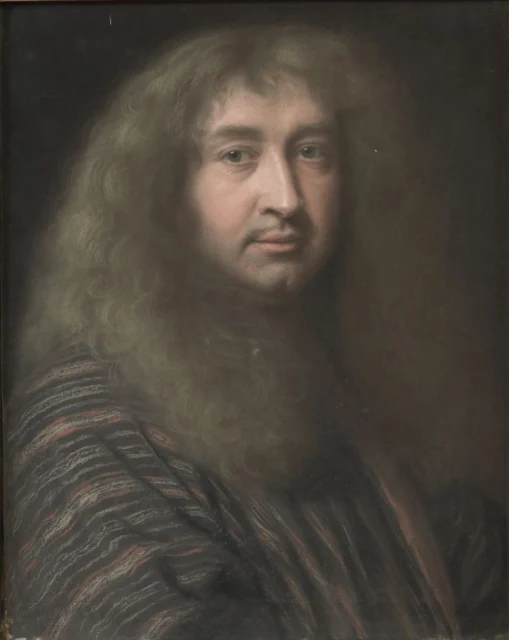
Nanteuil was the leading portraitist of the age in copperplate. He engraved Louis XIV nearly a dozen times, along with the king's chief ministers, the cardinal Mazarin and Colbert among them. He set the sitter in a plain oval on a stone ledge, stripped of props, so that nothing pulls the eye from the face.
He also drew and worked in pastel, and often took a sitter's likeness from life before cutting the plate. That formula, a candid head in an oval frame, ruled French portrait engraving for more than a century after his death in 1678.