Rodolfo Amoedo
1857–1941 · Brazil · Orientalism
The story
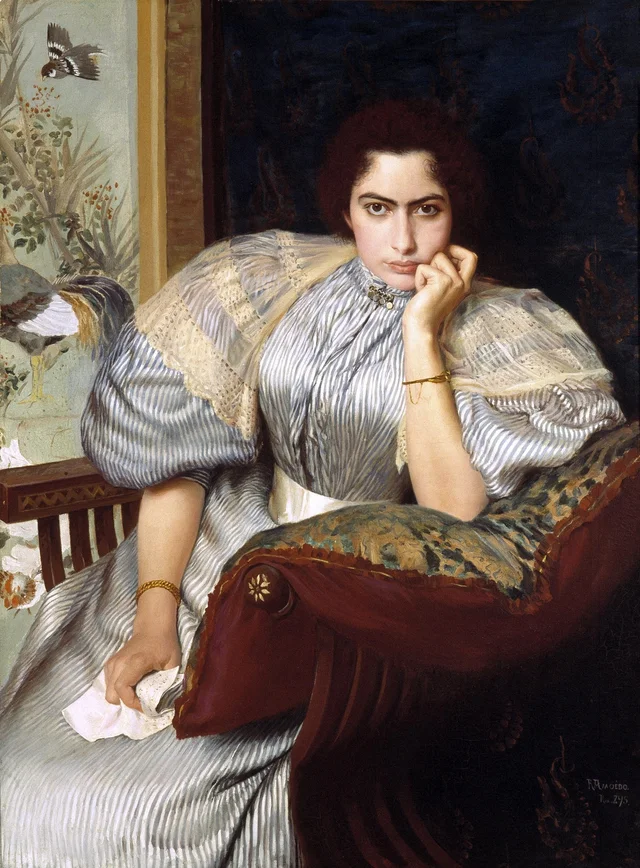
Rodolfo Amoedo was one of the painters who taught Brazil how to paint in the European academic manner, and then taught the generation that would break from it. Born in Salvador, in Bahia, in 1857, he studied in Rio de Janeiro and in 1878 won a state travelling prize with a biblical scene, the Sacrifice of Abel, which sent him to Paris.
He stayed in France nearly a decade, working at the École des Beaux-Arts under Alexandre Cabanel and the muralist Puvis de Chavannes, and came home fluent in the grand vocabulary of history painting, religious subjects, nudes, and allegories, along with large decorative schemes for public buildings in Rio.
His deepest mark, though, was as a teacher. For decades he held a chair at the national fine-arts school in Rio and served at times as its director, and his students included Eliseu Visconti and the young Cândido Portinari, who would become the most famous Brazilian painter of the 20th century. Amoedo went on teaching there until 1934 and died in Rio in 1941.