Rudolf Levy
1875–1944 · German Reich · Expressionism
The story
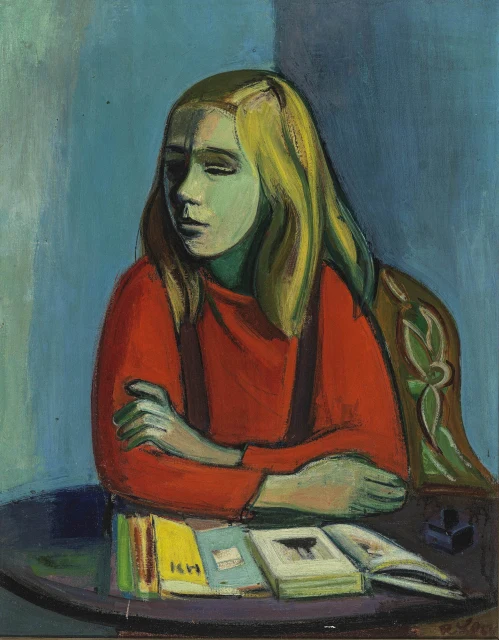
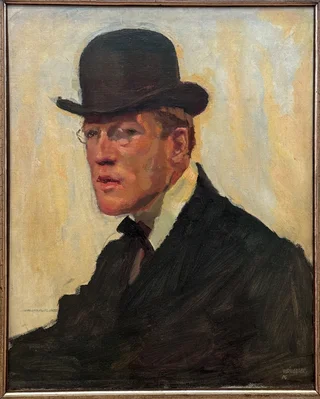
Before the First World War, the tables of the Café du Dôme in Paris drew a circle of German painters living abroad, and Rudolf Levy was at the center of it. He had come from Germany to study under Henri Matisse, and when Matisse opened a teaching academy, Levy ran its studio. His own painting stayed close to that world, warm color and relaxed figures, portraits and still lifes in a French key.
The rise of the Nazis turned him into a fugitive. Branded both a Jew and a maker of so-called degenerate art, he moved through Europe and the United States before settling, at last, in Florence.
The refuge did not hold. In December 1943 the SS arrested him in Florence. He was held in the city, then moved to Milan, and in April 1944 put on a deportation convoy. He was murdered at Auschwitz that same month, at the age of 68. The galleries of the Pitti Palace in Florence, the city of his last years, have since gathered his work for a retrospective.