Rutilio di Lorenzo Manetti
1571–1639 · Grand Duchy of Tuscany · Sienese school
The story
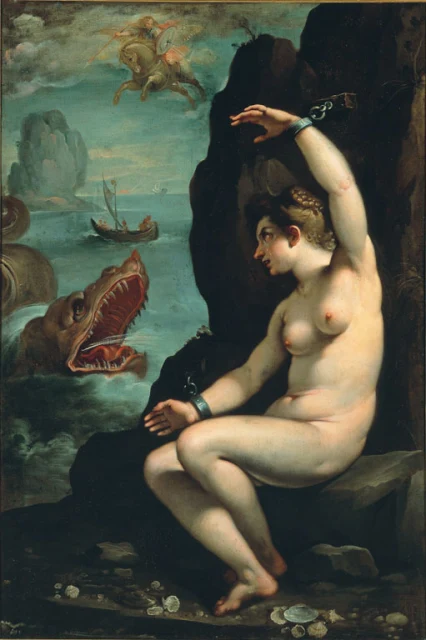
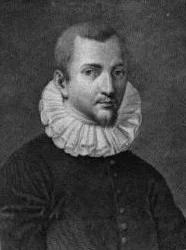
For more than two centuries this Andromeda carried other men's names. The Borghese inventory of 1693 gave it to Annibale Carracci, later lists to the Cavalier d'Arpino. The clue that settled it was a print, an engraving of the composition by Bernardino Capitelli, a Sienese etcher, inscribed Rutilius Manettus pinxit, Rutilio Manetti painted it. The German scholar Hermann Voss made the connection in 1932, and Paola Della Pergola confirmed it in 1959.
Manetti spent nearly his whole life in Siena, born there in 1571 and dying there in 1639, and from around 1620 he became the city's leading follower of Caravaggio, with hard light and figures pressed close to the viewer. The Borghese canvas comes earlier, around 1611 to 1612, and keeps the softer flesh of his first manner. Andromeda sits chained on the cliff, resigned, while Perseus, fresh from killing Medusa, drops out of the sky and the sea below lies calm, strewn with shells.