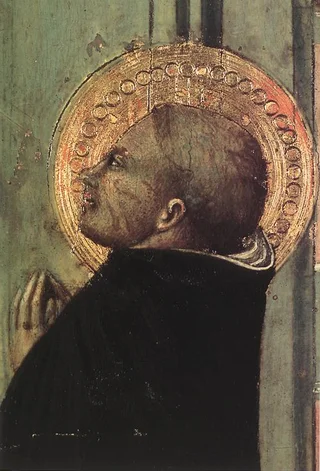
Sassetta
1450 · Republic of Siena · Sienese school
The story
In 1437 the Franciscan friars of Borgo San Sepolcro, a small town near Arezzo in Tuscany, signed a contract with a Sienese painter named Stefano di Giovanni, the man we now call Sassetta. He was to build and paint a huge double-sided altarpiece for their high altar, use the finest pigments, and follow subjects the friars chose, all within four years. The fee was 510 florins, an enormous sum for the time.
Sassetta did something telling. Rather than move to Borgo San Sepolcro, he stayed in his own city and painted the panels in Siena, then had the finished sections carted over the hills to be assembled on site. The work ran to nearly 60 panels and was not delivered until 1444.
He was the leading painter in 15th-century Siena, a city whose art still leaned on gold grounds and the flowing line of an older age. Sassetta kept that beauty and let in the newer International Gothic manner, along with ideas coming out of Florence, folding them into something quietly mystical of his own.
The great altarpiece was later broken up and scattered. Several of its scenes from the life of Saint Francis, including the moment he strips off his clothes to renounce his father, now hang in the National Gallery in London.
Works
8 works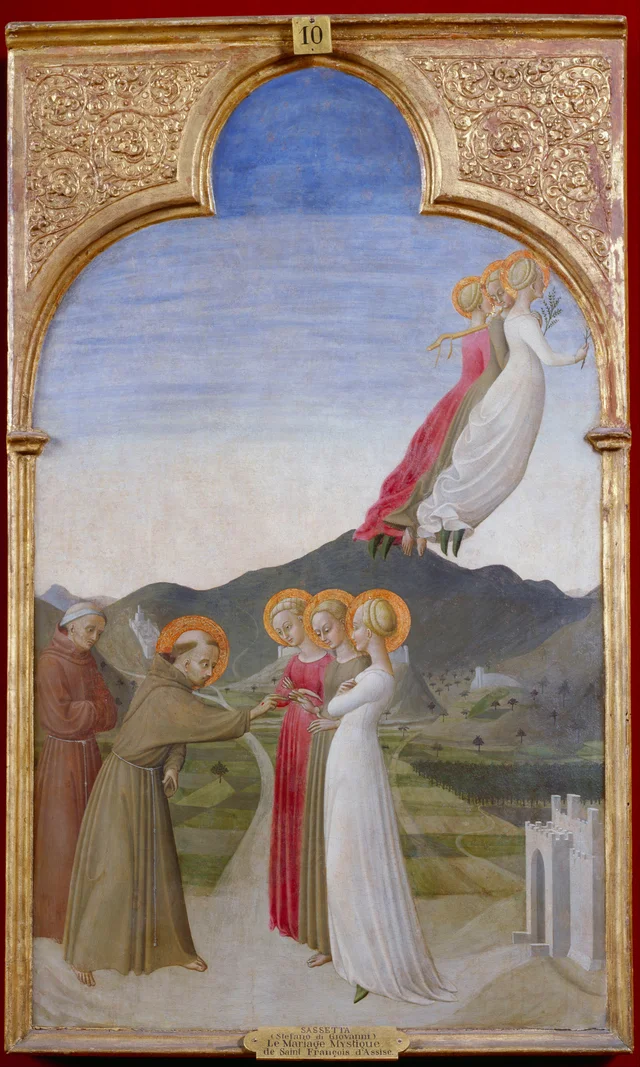 Mystic Marriage of Saint FrancisSassetta, 1437
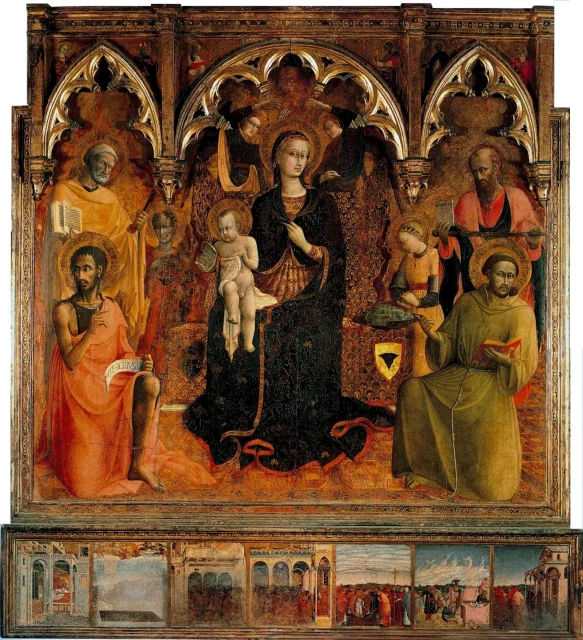 Madonna and Child with Angels, St. Peter, St. John The Baptist, St. Paul and St. Francis: The Story of the founding of the Basilica of Santa Maria Maggiore in RomeSassetta, 1430
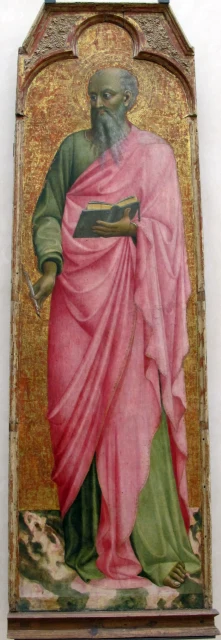 Saint John the EvangelistSassetta, 1440
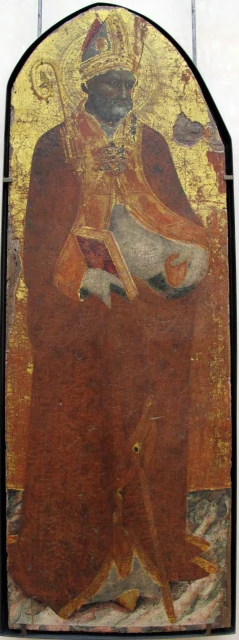 Saint Nicholas of BariSassetta, 1437
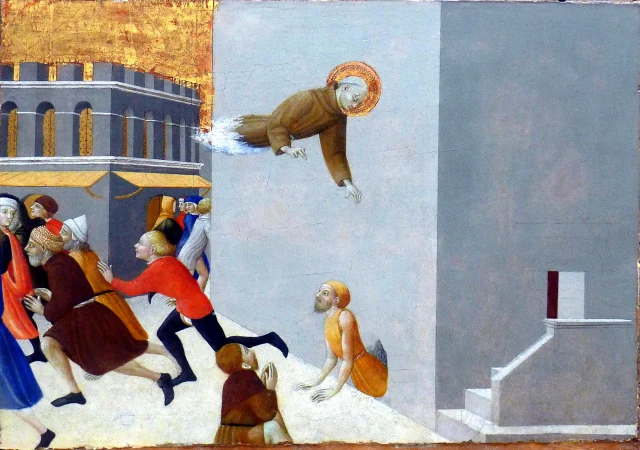 The Blessed Ranieri Rasini Freeing the Poor from a Prison in FlorenceSassetta, 1440
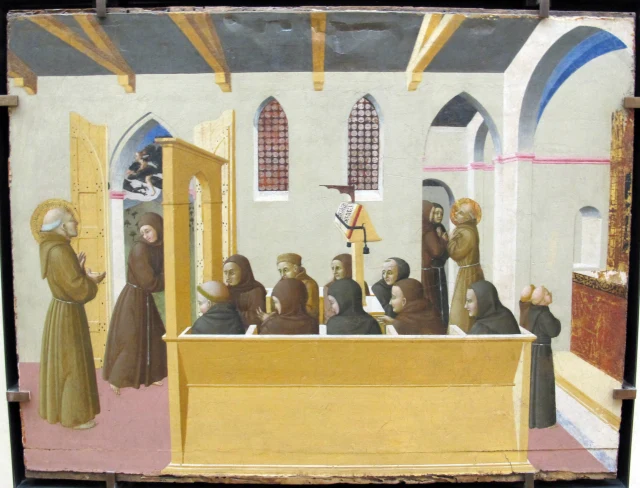 The Damnation of the Soul of the Miser of CiternaSassetta, 1440
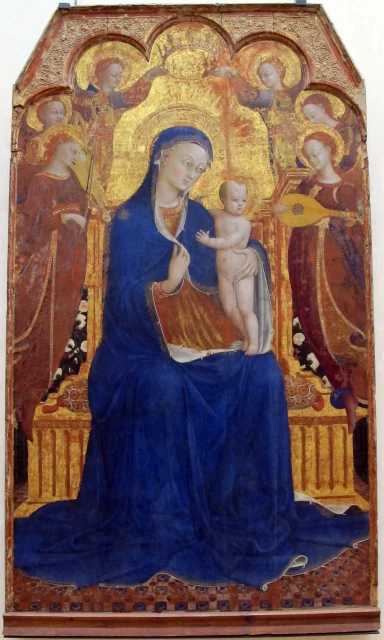 The Virgin and Child Surrounded by Six AngelsSassetta, 1440