School of Fontainebleau
French · Mannerism
The story
This name does not belong to a single painter. It covers the crowd of artists, Italian and French, who decorated the royal château of Fontainebleau, south of Paris, from the 1530s onward. King Francis I wanted an Italian palace on French soil, and rather than buy pictures he imported the men who made them.
The first to arrive was Rosso Fiorentino, a Florentine who had fled Rome after its sack in 1527. In 1532 he was joined by Primaticcio from Bologna, and together they invented the look the school is known for: elongated, elegant figures painted on the walls and framed by nudes and garlands modelled in high-relief stucco. The style grew out of Italian Mannerism, the generation after Raphael and Michelangelo, and through Fontainebleau it became the court taste of France.
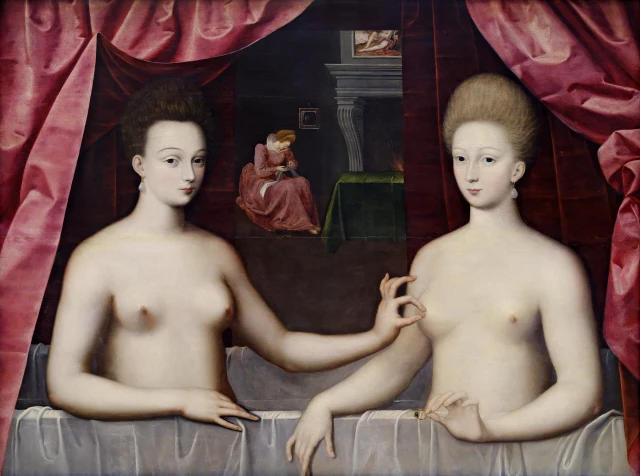
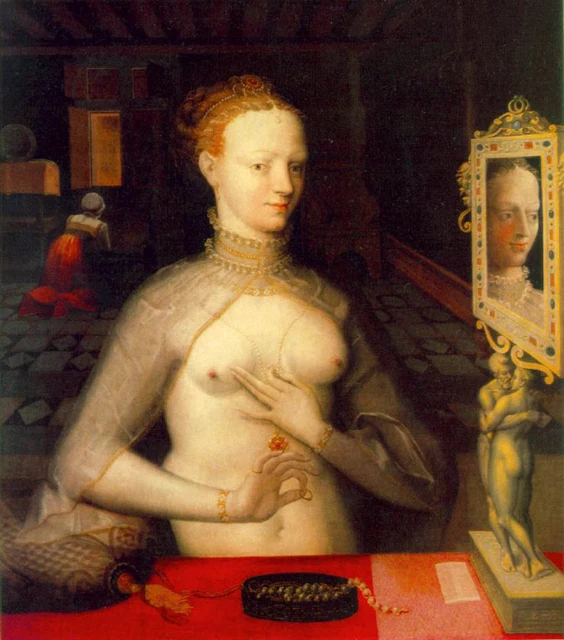
Works catalogued simply as School of Fontainebleau are ones that no single one of these hands can be safely pinned to, the best known being a cool, strange portrait of two noblewomen in a bath.