Sebastian Stoskopff
1597–1657 · Holy Roman Empire, Free Imperial City of Strasbourg · Still life painting, Baroque
The story
For nearly 300 years almost no one knew Sebastian Stoskopff's name. His still lifes were reassigned to bigger names or simply forgotten, until exhibitions after 1930 pulled him back into view as one of the finest still-life painters the German-speaking world produced in the 17th century.
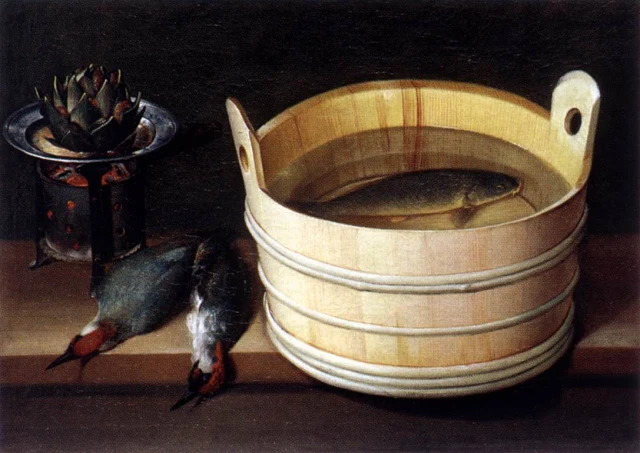
Born in Strasbourg, then a free Protestant city on the Rhine, he trained near Frankfurt under the painter Daniel Soreau, worked in Paris for most of two decades, and passed through Venice, where the German artist and writer Joachim Sandrart met him in 1629. His subject was often the simplest thing imaginable: glasses. He painted baskets and shelves crowded with plain drinking glasses, catching every highlight on the clear surfaces, the whole arrangement built with an almost geometric order against a dark ground.
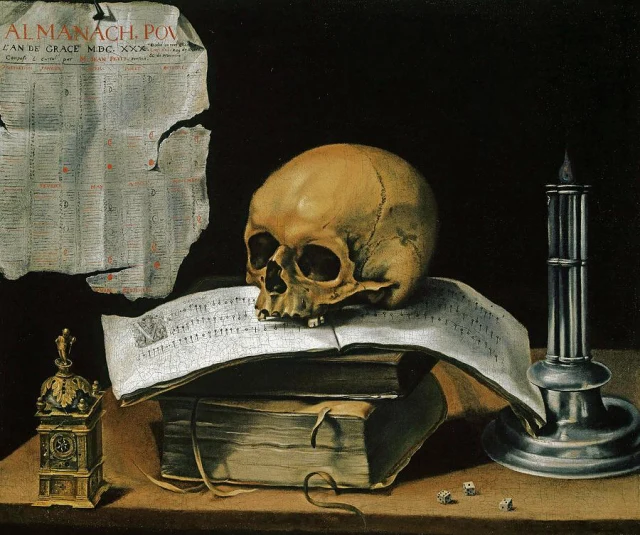
That cool precision carried a warning. Many of his pictures are vanitas paintings, where a skull, a guttering candle or a well-thumbed book sits among the objects to remind the viewer how short all of it is. He came home to Strasbourg for good in 1641, and one of his best-loved works, a wicker basket packed with plain glasses, still hangs there today.