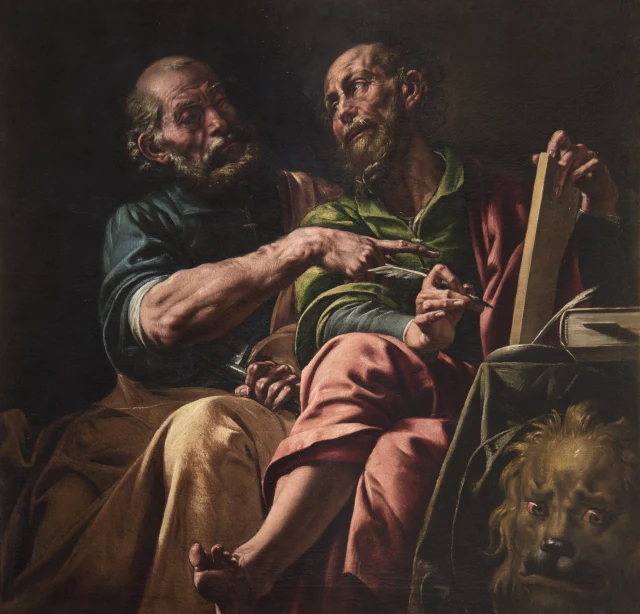
Tanzio da Varallo
1633 · Duchy of Milan · Baroque, Mannerism, Lombard school
The story
On 12 February 1600 the local authorities of the Valsesia, an Alpine valley in the Duchy of Milan, issued a safe conduct to two brothers, Melchiorre and Antonio d'Enrico, so that they could travel to Rome for the Holy Year and work their way as painters. Antonio is the one remembered as Tanzio da Varallo. He was born in Alagna, at the head of the valley, around 1575 or a few years later, into a family of artists. His older brother Giovanni d'Enrico became a sculptor and architect.
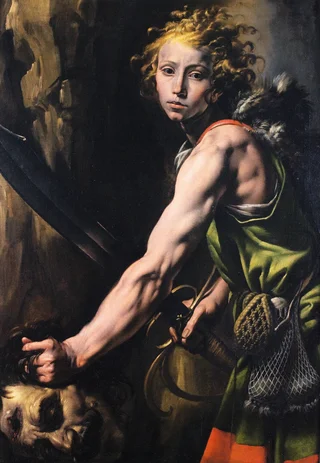
In Rome Tanzio met the painting of Caravaggio and his followers, the raking light and the unidealised bodies, and he carried it back north. Altarpieces he left in the Abruzzo around 1610 and 1612 were identified as his only in modern times. By 1616 he was back in the valley, and between 1618 and 1620 he painted the chapel of Pilate Washing his Hands on the Sacro Monte of Varallo, the hillside of chapels where his brother Giovanni was modelling life-size terracotta figures. His two versions of David with the head of Goliath belong to the same years. Around 1630 he was frescoing churches in Milan, and he died in 1633.