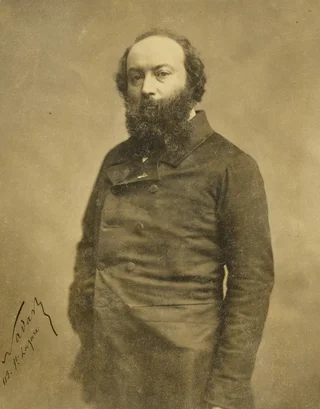
Théodore Rousseau
1812–1867 · France · Barbizon school
The story
For years the Paris Salon jury turned Théodore Rousseau away so reliably that he earned a nickname, le grand refusé, the great rejected one. His crime was to paint plain French landscape, oak trees and marshes and evening skies, as if it were a worthy subject in its own right, at a time when official taste still wanted history and mythology.
So he left the city. In the 1840s Rousseau settled at Barbizon, a village on the edge of the Forest of Fontainebleau near Paris, and a loose group of like-minded painters gathered there to work directly in front of nature. They became the Barbizon School, an important step on the road from studio landscape toward the open-air painting of the Impressionists who followed.
Rousseau also fought to protect the forest itself, and helped persuade the authorities to set aside a protected reserve among the old trees, an early act of conservation. He stayed at Barbizon the rest of his life, close to his friend the peasant-painter Jean-François Millet, and died there in 1867 with Millet at his bedside.
Works
6 works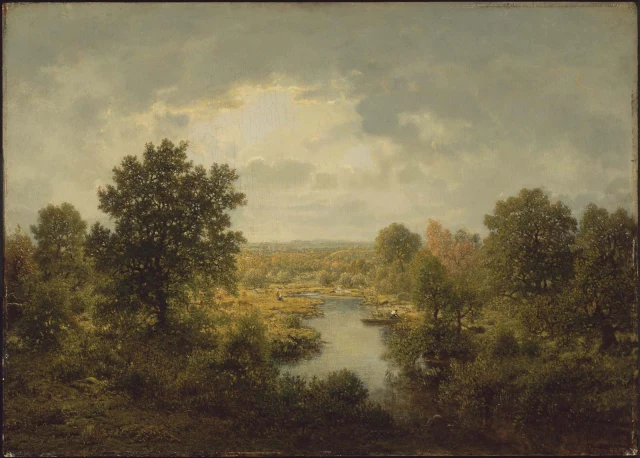 Banks of the Sèvre (Vendée)Théodore Rousseau, 1859
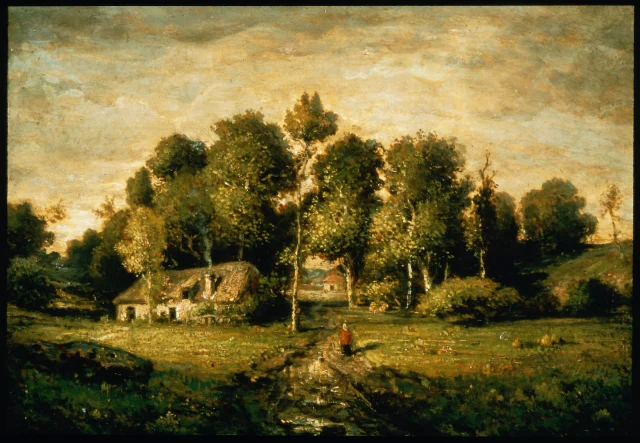 Cottage in a Clump of TreesThéodore Rousseau
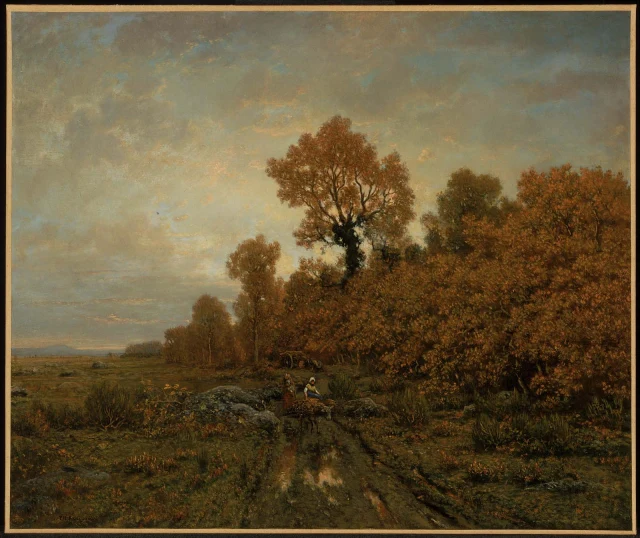 Edge of the Woods (Plain of Barbizon near Fontainebleau)Théodore Rousseau, 1855
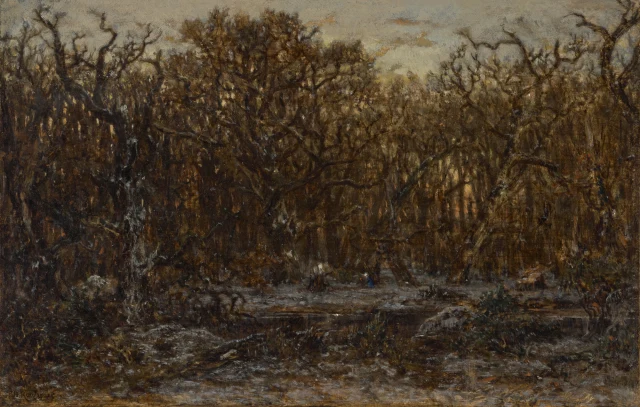 Forest at Sunset in WinterThéodore Rousseau, 1846
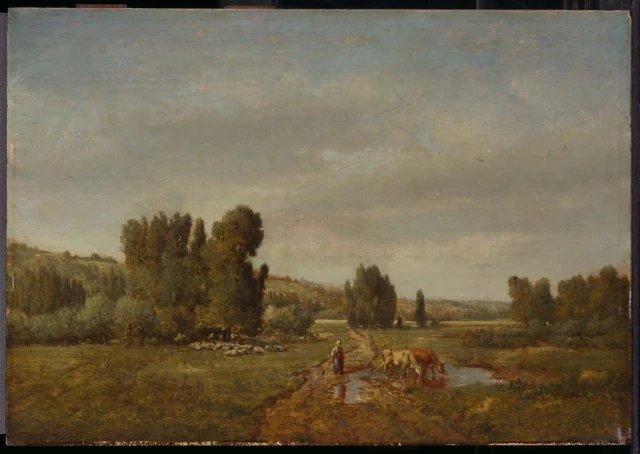 Landscape with a Peasant Watering her CowsThéodore Rousseau
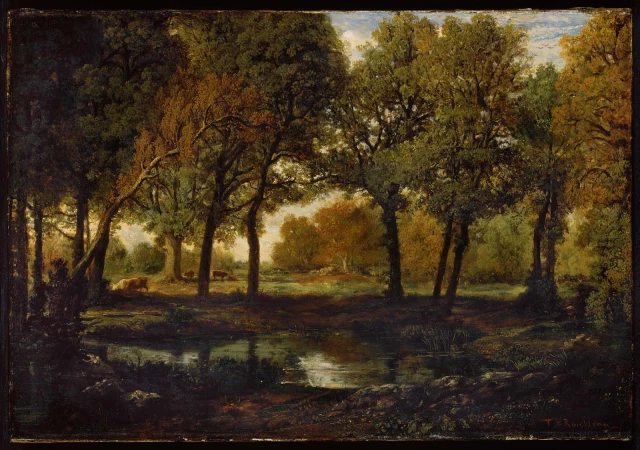 Pool in the ForestThéodore Rousseau, 1852