Theophanes the Greek
1340–1410 · Byzantine Empire · Byzantine art, Icon painting, Medieval art
The story
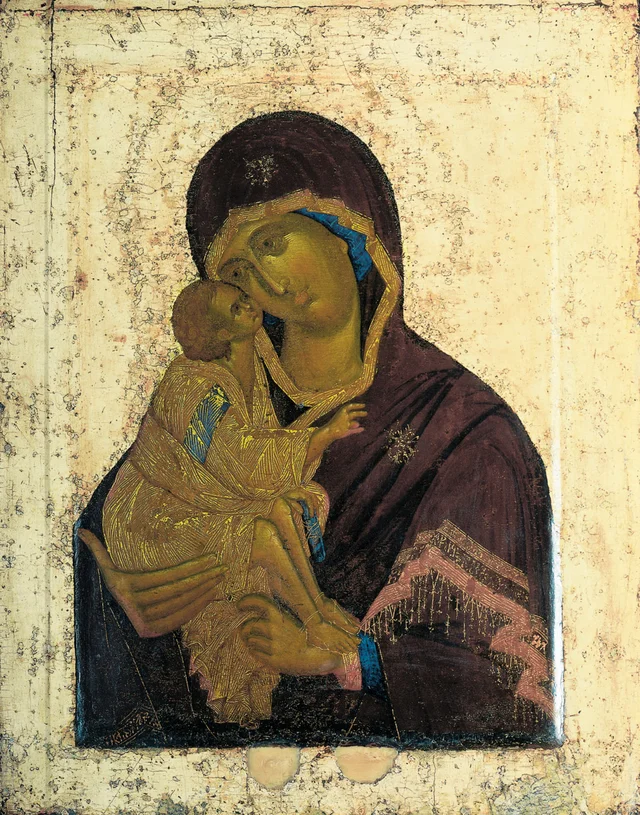
In 1378, in the trading city of Novgorod in northern Rus, a painter trained in Constantinople covered the walls of the Church of the Transfiguration on Ilyin Street with figures unlike anything the locals made. His saints and hermits are lean and severe, lit by quick white strokes that fall like sparks across their faces. This is the one work securely documented as his, and everything else attributed to Theophanes the Greek is measured against it.
He had come out of the Byzantine world, where he was said to have already painted dozens of churches, and he carried its late, intense style north. In Moscow he worked on the Kremlin's Cathedral of the Annunciation around 1405, alongside a younger Russian monk named Andrei Rublev.
Rublev would move toward a gentler, more still manner, while Theophanes kept his stark, dramatic fire. His Novgorod frescoes survive only in fragments, smoke-darkened and worn, and they remain the surest trace of the man.