Thomas Willeboirts Bosschaert
1613–1654 · Duchy of Brabant · Baroque
The story
In 1653 Antwerp settled a commission by contest. Money had once been set aside for an altarpiece by Anthony van Dyck, who died before painting it, and two local painters, Thomas Willeboirts Bosschaert and Cornelis Schut, were each asked for a Martyrdom of Saint George. Both pictures were shown, and a panel of six judges, three chosen by each artist, gave the commission to Schut. Willeboirts died the following January.
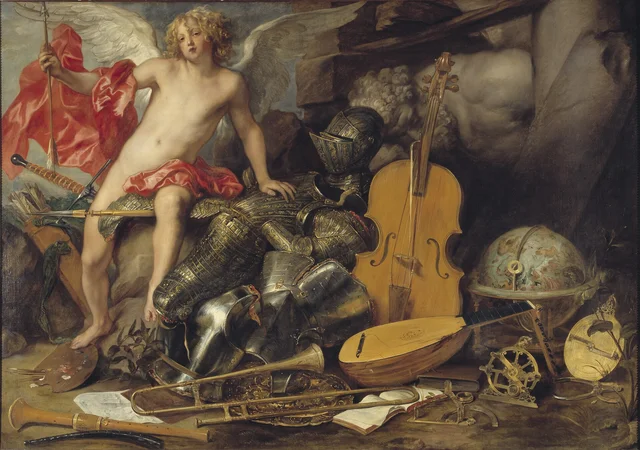
He was born in 1613 in Bergen op Zoom, on the Dutch side of the border, and trained for eight years in Antwerp with Gerard Seghers, a leading history painter. His religious pictures, mythologies and portraits are strongly shaped by van Dyck. In the late 1630s he was one of the painters who worked up Rubens's oil sketches into canvases for the Torre de la Parada, the hunting lodge of Philip IV of Spain.
His steadiest patrons were across the front line. The Dutch stadtholder Frederik Hendrik bought from him through the 1640s, and his widow Amalia van Solms ordered a canvas for the Oranjezaal, the great hall of her palace Huis ten Bosch near The Hague. Willeboirts often shared a picture with specialists, Paul de Vos for animals and Daniel Seghers, the Jesuit flower painter, for garlands, and at least nine pupils passed through his studio.