Vicente Carducho
1576–1638 · Grand Duchy of Tuscany, Spain · Baroque painting, Mannerism
The story
In 1627 the court of Philip IV set four of its painters the same subject, the expulsion of the Moriscos, the converted Muslims driven out of Spain from 1609, and had two judges pick a winner for the new hall of the Alcázar in Madrid. Vicente Carducho, painter to the king for 18 years by then, lost. The winner was Diego Velázquez, still in his twenties, who was given a palace post for it.
Carducho was born Vincenzo Carducci in Florence around 1576, though part of the older literature gives 1578. He came to Madrid as a child with his elder brother Bartolomé, who had been hired to paint at El Escorial, the monastery-palace of Philip II, and he learned the trade in his brother's workshop. When Bartolomé died in 1609 he took over his post as painter to the king. He signed and published in Spanish, and Vicente Carducho is the form the Prado prints to this day.
In 1633 he brought out the Diálogos de la pintura, a book arguing that painting belonged among the liberal arts and that its practitioners stood with poets and scholars. There was a courtroom behind that argument. Carducho and other Madrid painters were suing the royal treasury over whether painters owed the alcabala, the sales tax on trade, and the book carries the legal papers of the case with it, testimony from the playwright Lope de Vega included.
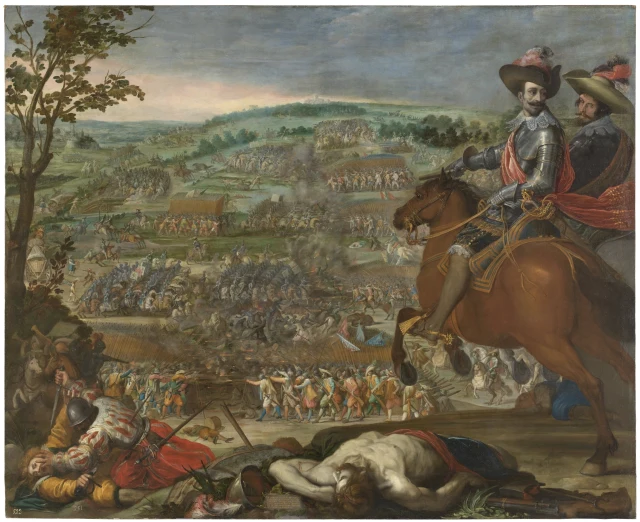
His last large commission was the throne room of the new Buen Retiro palace, where twelve battle pictures hung together with Velázquez's Surrender of Breda. Carducho painted three of the twelve, more than anyone else in the cycle: Fleurus, the relief of Constance, and the storming of Rheinfelden. Velázquez's prize-winning Moriscos canvas burned in the Alcázar fire of 1734, and the only image of that competition that survives is Carducho's own drawing for it.