Vincenzo Camuccini
1771–1844 · Papal States · Neoclassicism, Academic art
The story
Vincenzo Camuccini spent most of his twenties copying other men's paintings. In the Rome of the 1790s that was steady work: his brother Pietro restored pictures, and Vincenzo learned by reproducing the old masters and studying the ancient ruins around him with the archaeologist Ennio Quirino Visconti. What turned a skilled copyist into the leading painter of the city was a commission in 1793 from an eccentric Englishman, Frederick Hervey, Earl of Bristol and a bishop, who wanted scenes from the Roman Republic.
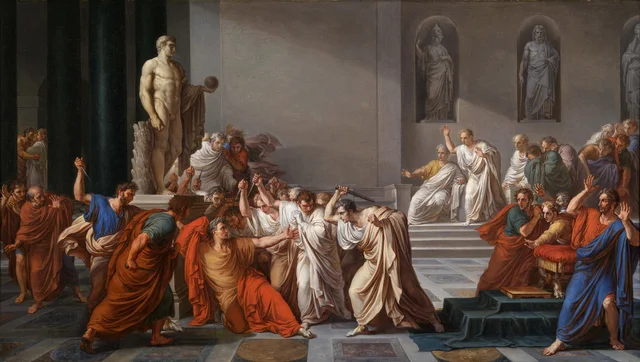
Out of it came two large canvases, the Death of Virginia and the Death of Julius Caesar, stories of stabbing and civic breakdown that spoke to a Rome living through the upheavals of the Napoleonic years. Camuccini finished the Caesar around 1806, all sober grandeur and archaeological correctness, and it made his name. For decades afterward he was the establishment painter of the papal city, gathering honours and running its art institutions.
His careful classical manner went out of fashion soon after he died in 1844, as Romantic and then Realist painting took hold. The two Republican death scenes left Rome for the south. Both entered the collection of the Museo di Capodimonte in Naples, where the Caesar has hung since 1864.