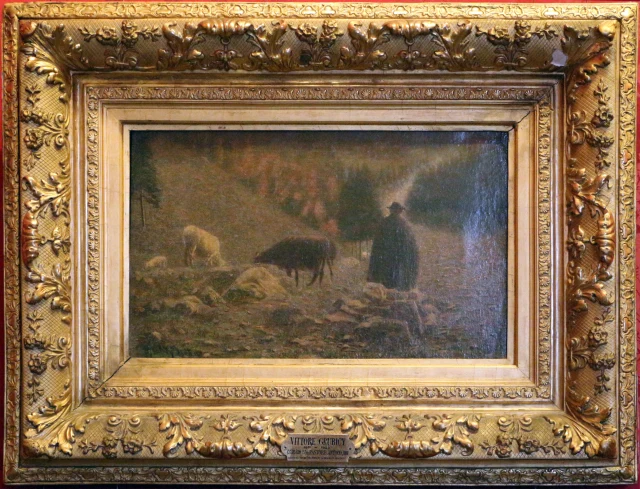
Vittore Grubicy de Dragon
1851–1920 · Kingdom of Italy · Divisionism, Scapigliatura
The story
In 1883 Giovanni Segantini signed himself exclusively to the Grubicy gallery in Milan, and the man on the other side of that contract had not yet taken up painting. Vittore Grubicy de Dragon ran the gallery with his brother Alberto on a model new to Italy, putting living artists under contract and building their reputations abroad instead of trading in old pictures.
He travelled to buy and came back with ideas. In the Netherlands in the early 1880s he attached himself to the Hague School painters, above all the landscapist Anton Mauve, who was Van Gogh's cousin by marriage and briefly his teacher. In France he saw what Seurat and Signac were doing with divided colour, pure tones set side by side for the eye to mix. He pressed the method on the painters he handled. Emilio Longoni, one of them, put it plainly, that Grubicy had brought Divisionism from abroad and was having Segantini, Morbelli and himself do it. He talked Segantini into repainting a finished canvas, the Ave Maria on the lake, in the new technique. From 1886 Grubicy wrote criticism for the paper La Riforma, and the Brera triennale of 1891 in Milan gave the Divisionists their first showing as a group.
His own painting began in those same years, self-taught and deliberately small, single motifs in thin divided strokes that he kept coming back to and reworking for years afterwards. The Old Shepherd, in Florence, is signed and dated 1888 and was painted in the Valle di Scalve in the mountains above Bergamo. Grubicy gave it to the gallery himself, together with a second canvas, Terzetto tenue.