Wilhelm Leibl
1844–1900 · Kingdom of Prussia · Realism
The story
In 1869 Gustave Courbet, the great French realist, came to Munich for an international art show and singled out the work of a 25-year-old local painter, Wilhelm Leibl, for real praise. Leibl went to Paris on the strength of it, but the war between France and Germany in 1870 sent him home for good.
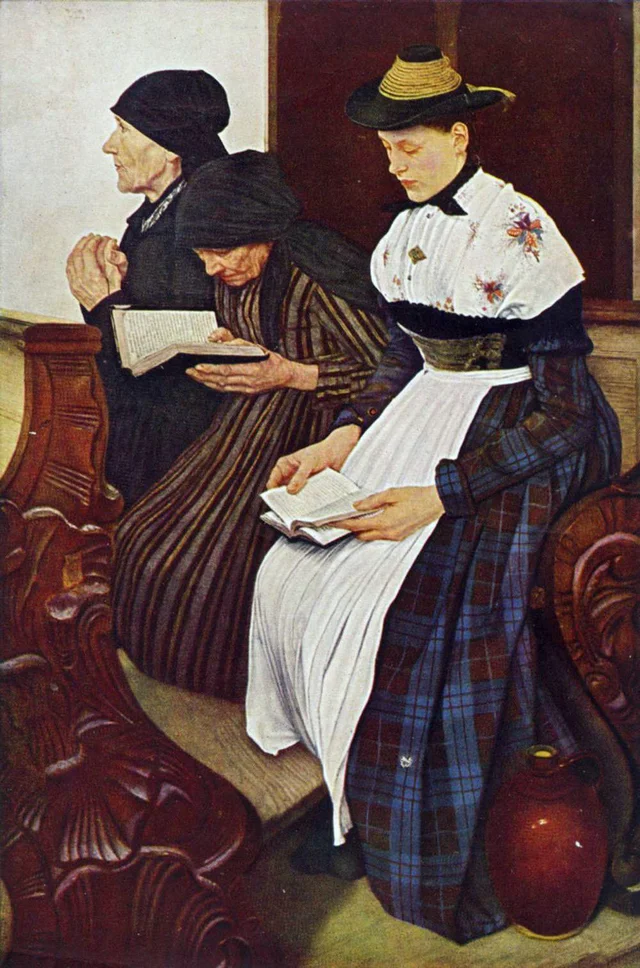
What he did next was to walk away from the art capitals altogether. He settled in small Bavarian villages and spent the rest of his life painting the peasants around him with an almost unblinking exactness, every seam and knuckle and worn prayer book given its due. His best-known painting, 'Three Women in Church', shows three generations of village women praying in a pew, and it took him about three and a half years. Partway through, the parish priest who had let him work inside the church died, and the new one turned him out. Only the personal intervention of the Prince Regent of Bavaria got Leibl back in to finish it.
The picture made his name across Germany while he was still only 38. In his later years his health broke down and his brushwork loosened, moving away from that early enamel-smooth finish. He died in 1900, having spent most of his working life out among the farm villages he painted.