Wilhelm Morgner
1891–1917 · German Empire · Expressionism
The story
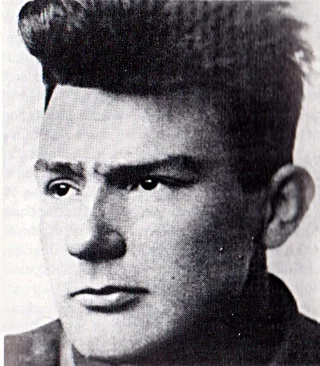
In February 1912, when the Blue Rider's second exhibition opened in Munich, 20 of the drawings on show came from a 21-year-old in the small Westphalian town of Soest. Wilhelm Morgner had met Franz Marc shortly before, and one of his drawings was printed in the Blue Rider almanac that year. Herwarth Walden, editor of the Berlin magazine Der Sturm, published 11 of his woodcuts and linocuts in 1912 and 1913.
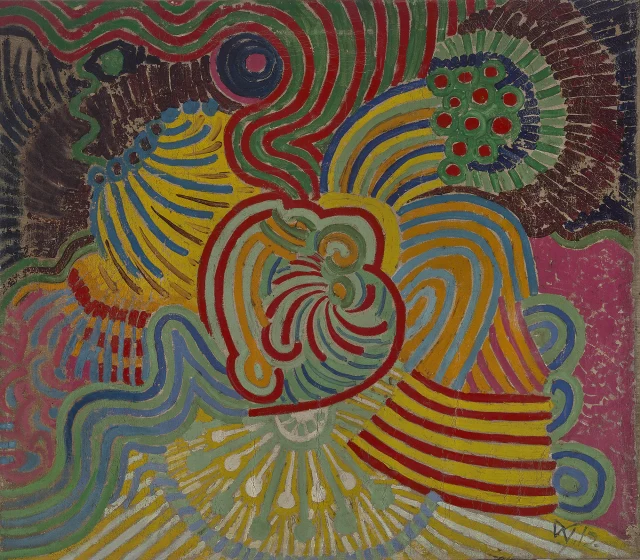
Morgner's father, a military musician who became a railway conductor, died when the boy was a baby. In 1908 he went to a private painting school in Worpswede, the artists' village near Bremen, and came home to paint the clay diggers and woodworkers of Soest in thick, dotted brushwork. Under the impact of Kandinsky, Marc and Jawlensky he turned in 1912 to bright, almost abstract compositions.
He was conscripted in the autumn of 1913. He fought on the Marne in 1914 and in Russia in 1915, then worked as a battalion draughtsman in Bulgaria and Serbia. Sent back to the Western Front in 1917, he was killed that August near Langemark in Flanders, at 26.