Wilhelm Trübner
1851–1917 · Grand Duchy of Baden · Realism, German Realism
The story
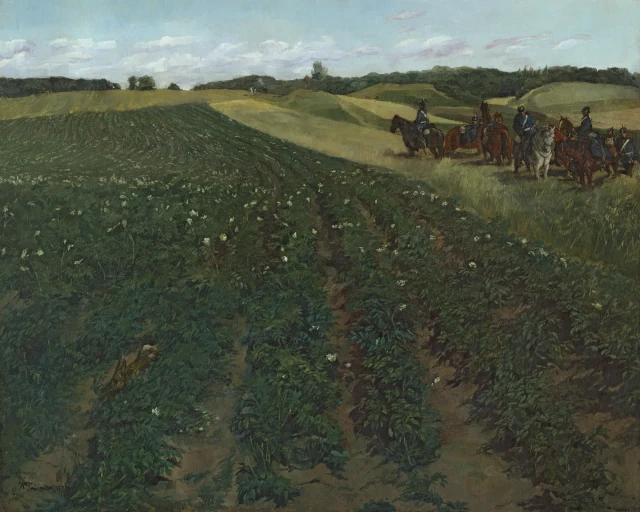
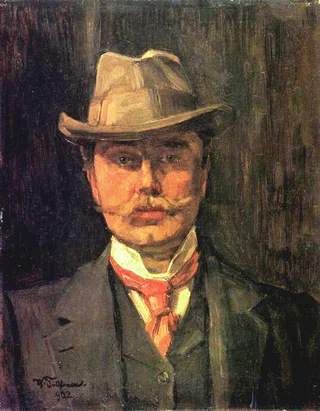
In 1867 the painter Anselm Feuerbach encouraged a 16-year-old goldsmith's son in Heidelberg to give up the family trade and paint. Wilhelm Trübner took the advice, studied briefly at the Karlsruhe academy and in 1868 moved on to Munich. There, at the first international art exhibition of 1869, he saw the work of the French realist Gustave Courbet and of Wilhelm Leibl, and it set his course.
He was soon one of the young painters around Leibl, working beside Carl Schuch and Hans Thoma, for whom the handling of paint mattered more than any story a picture might tell. The art historian Eberhard Ruhmer placed Trübner's best work in exactly those years, from 1872 to 1876.
Recognition came late. Only at the end of the 1880s did buyers and critics begin to notice him, and in 1891 he showed 80 works at the Munich Kunstverein. Then the posts followed, a teaching studio at the Städel art school in Frankfurt from 1895 and, from 1903, a professorship at the Karlsruhe academy, which he directed from 1904 to 1910. In 1900 he married his pupil Alice Auerbach, herself a painter. He died in Karlsruhe in 1917.