Willem Claesz. Heda
1594–1680 · Dutch Republic · Dutch Golden Age, Still life painting
The story
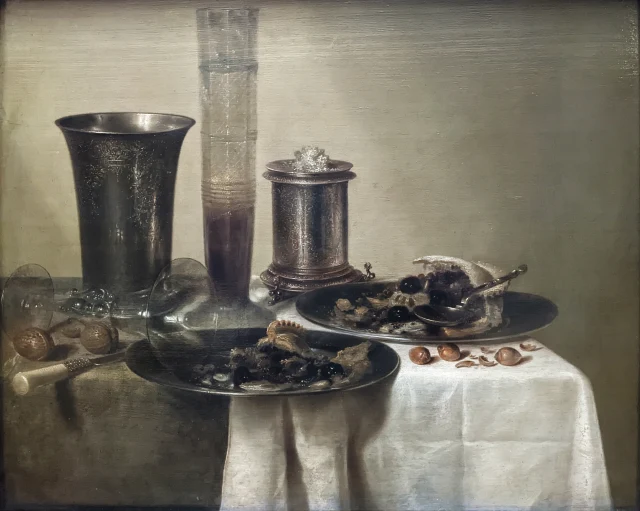
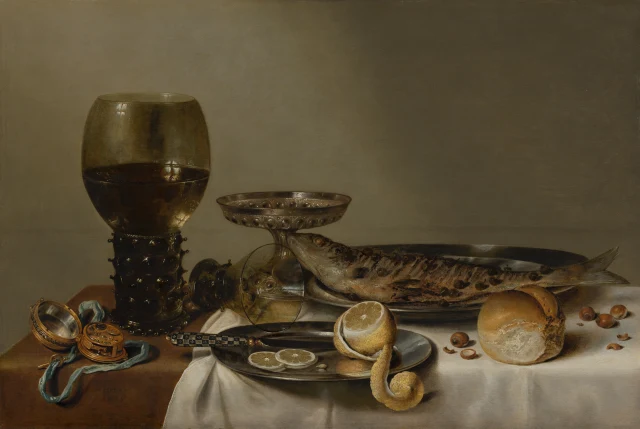
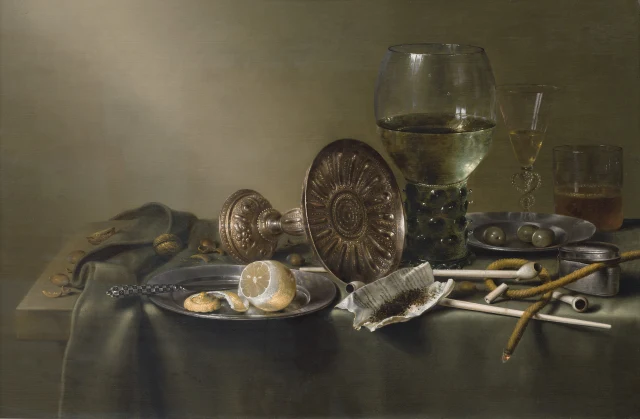
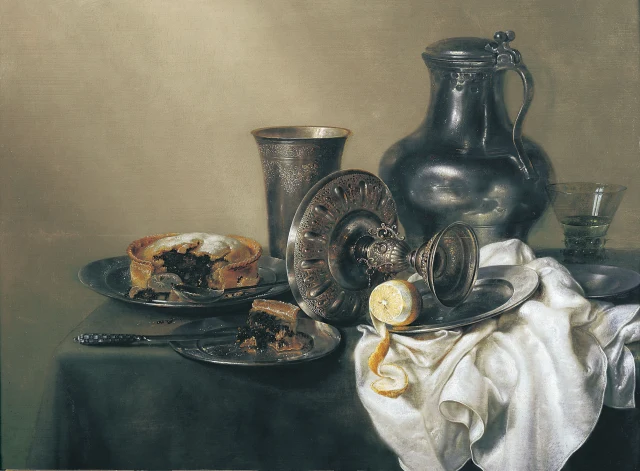
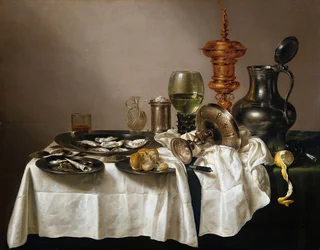
In the Haarlem of the 1620s a new kind of still life appeared on the market, and Willem Claesz. Heda was one of the two men who invented it. He painted a half-finished meal in almost a single colour: pewter, glass and silver laid out in silvery greys and soft browns, with the light doing all the work. Where earlier still lifes crowded the table with bright fruit and flowers, his stay quiet and nearly monochrome.
These pictures were called breakfast pieces, or in Dutch ontbijtjes, and Heda built a whole tradition of them together with his Haarlem neighbour Pieter Claesz. Look at a typical Heda and you find an overturned silver cup, a tall wine glass called a roemer, a lemon half-peeled with the rind curling down, oysters, a knife pushed to the table's edge. Nothing is tidy. The meal has just been interrupted.
He was born around 1594 and worked in Haarlem almost his whole life, exclusively as a still-life painter, dying there around 1680. His pictures sold well beyond the Dutch Republic in his own day, so much so that the painter Rubens owned two of his breakfast pieces in Antwerp.