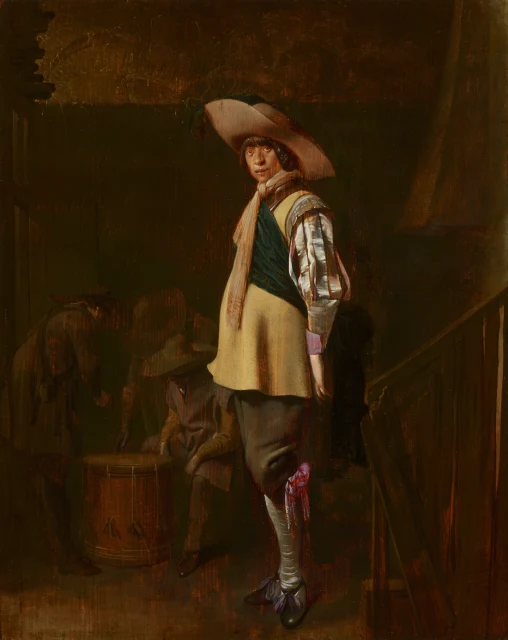
Willem Cornelisz Duyster
1599–1635 · Dutch Republic · Dutch Golden Age, Genre painting
The story
Willem Duyster took his surname from a house. From 1620 his family lived in an Amsterdam house called De Duystere Werelt, the dark world, and the painter who grew up there came to be known as Duyster.
He began with portraits and then turned to the subject he is remembered for, the guardroom scene. These are small panels of soldiers off duty during the long war with Spain, playing tric-trac, idling by the fire, or sharing out plunder. Duyster had a sharp eye for satin and buff leather and for the way men in a group watch one another. Where other painters filled such rooms with prostitutes, the women in his pictures tend to be hostages held for ransom or victims of looting.
The Amsterdam art world he worked in was small and close. In 1625, at a party at a country house, the painter Pieter Codde struck him in the face with a tin jug. In 1631 Duyster and the guardroom painter Simon Kick married each other's sisters in a double wedding, and both couples set up home in the dark world. Four years later Duyster died of the plague, aged 35, and he was buried in Amsterdam's Zuiderkerk on 31 January 1635.