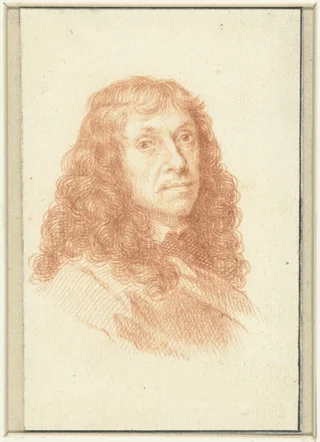
Willem Kalf
1619–1693 · Dutch Republic · Dutch Golden Age painting
The story
By the 1650s the Dutch Republic was the richest trading nation in Europe, and its ships were bringing home things most people had only heard of: Chinese porcelain bowls, Venetian glass, spices, silver worked by the best Amsterdam smiths. Willem Kalf built a whole late career out of arranging those objects on a table and lighting them as if they were relics.
His early paintings were the opposite. Dim peasant kitchens with copper pots and vegetables heaped on the floor, painted while he was living in Paris in the 1640s. What changed was fashion. In the 1650s wealthy collectors wanted the pronkstilleven, the 'ostentatious still life,' and Kalf, by then settled in Amsterdam, gave them the finest version anyone painted. A half-peeled lemon, its rind curling over the table edge, turns up again and again as his signature note, sharp and sour against all that gold.
He could paint those treasures convincingly because he owned them. Kalf worked as an art dealer too, handling exactly the silver vessels, marble tables and porcelain that fill his pictures. Around 1680 he seems to have put down the brush almost entirely to concentrate on the trade, and he died in Amsterdam in 1693.
Works
5 works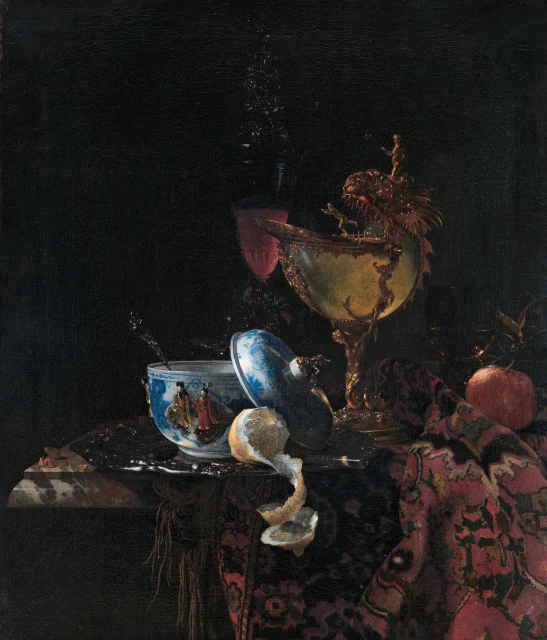 Still Life with a Chinese Bowl, Nautilus Cup and Other ObjectsWillem Kalf, 1662
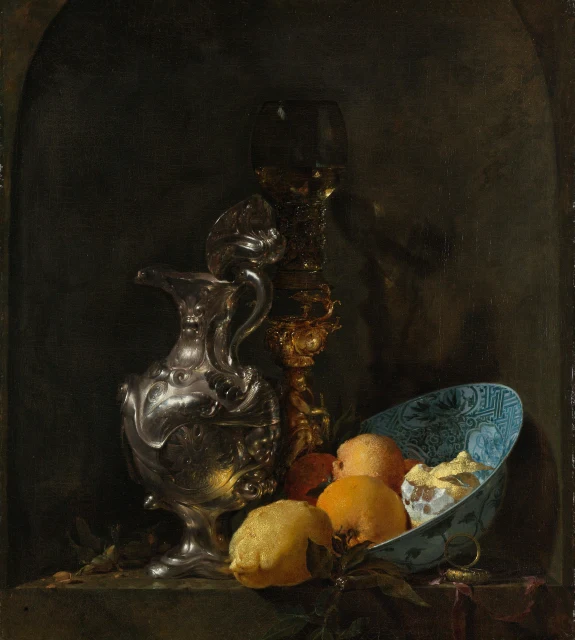 Still Life with a Silver JugWillem Kalf, 1657
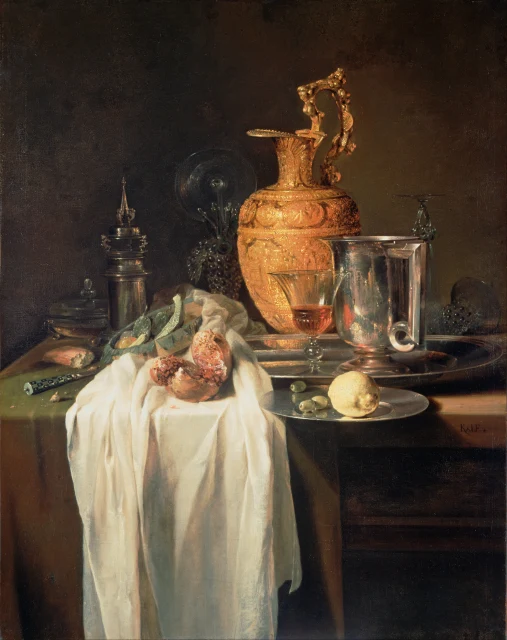 Still Life with Ewer, Vessels, and PomegranateWillem Kalf, 1645
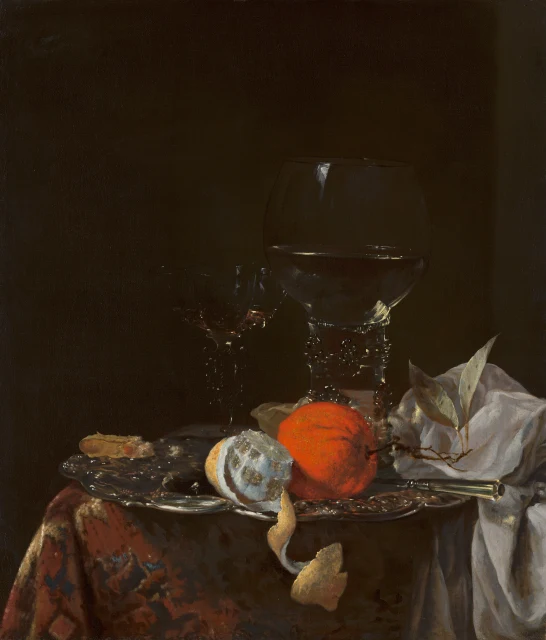 Still Life with Fruit and Wineglasses on a Silver PlateWillem Kalf, 1660
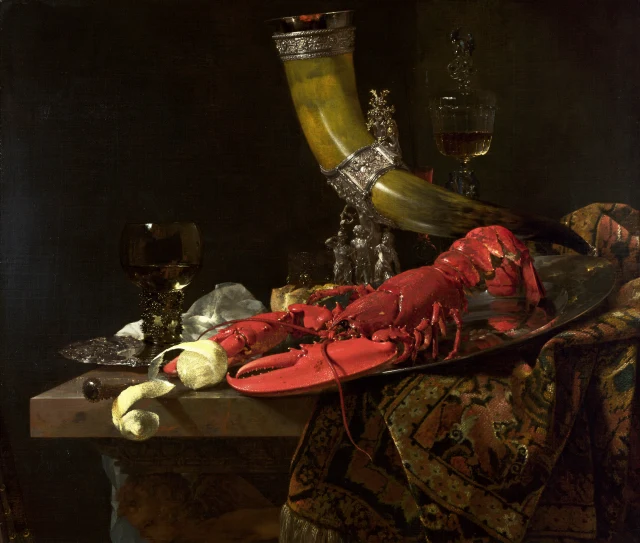 Still Life with the Drinking-Horn of the Saint Sebastian Archers' Guild, Lobster and GlassesWillem Kalf, 1653