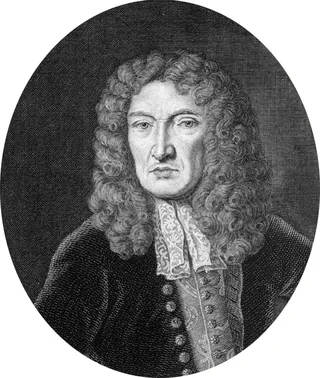
Willem van de Velde the Elder
1611–1693 · Dutch Republic · Dutch Golden Age, Seascape painting
The story
When the Dutch fleet went out to fight the English in the 1650s and 60s, Willem van de Velde the Elder often went with it. He would take a small vessel close to the action to record the ships, the smoke and the order of battle from life, then work the sketches up back on shore. He thought of himself first as a draughtsman, and signed his letters Scheepsteickenaer, ship's draughtsman.
His speciality was the penschilderij, the pen painting: enormous, meticulous drawings in black ink on a panel or canvas prepared in white, so finely done they can look like engravings until you stand close. He made comparatively few pictures in colour, leaving those largely to his son, also called Willem, who painted the same seas in oils.
In 1672, a disastrous year for the Dutch Republic when it was invaded by land, both men crossed to England and set up a studio under royal patronage. The son was made a court painter to Charles II in 1677, and the elder kept drawing ships until his death in London in 1693.
Works
5 works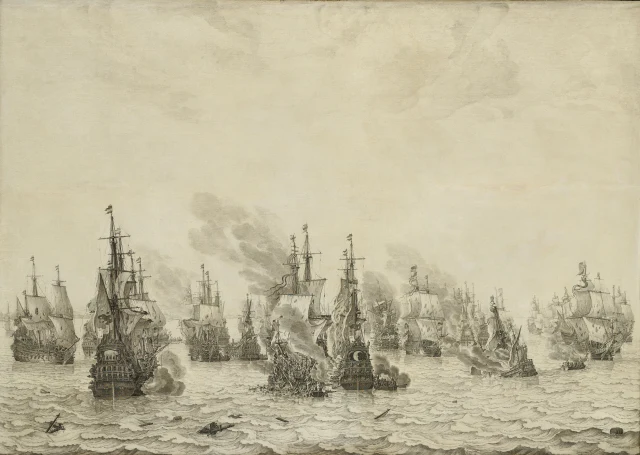 The Battle of Livorno (Leghorn)Willem van de Velde the Elder, 1659
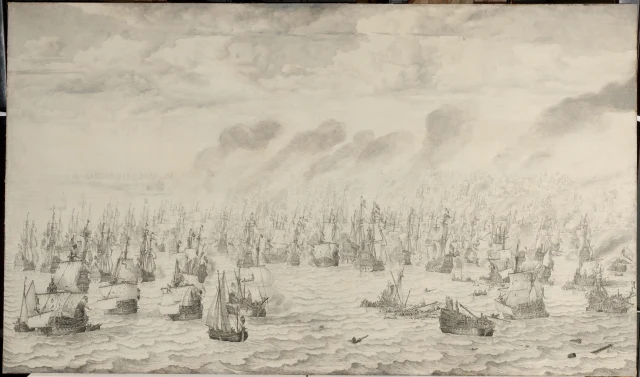 The Battle of Terheide, 10 August 1653: an episode from the First Anglo-Dutch War (1652-54)Willem van de Velde the Elder, 1657
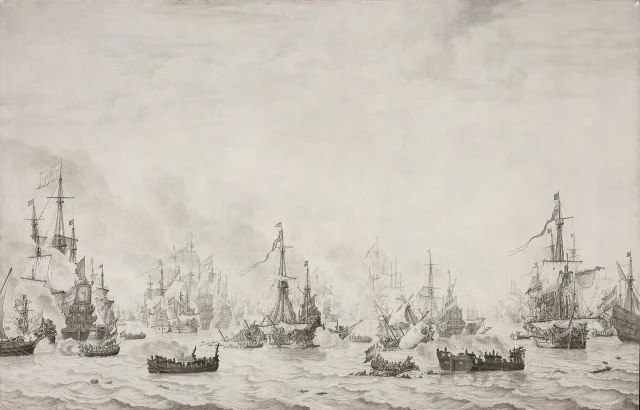 The Battle of the Downs against the Spanish Armada, 21 October 1639Willem van de Velde the Elder, 1659
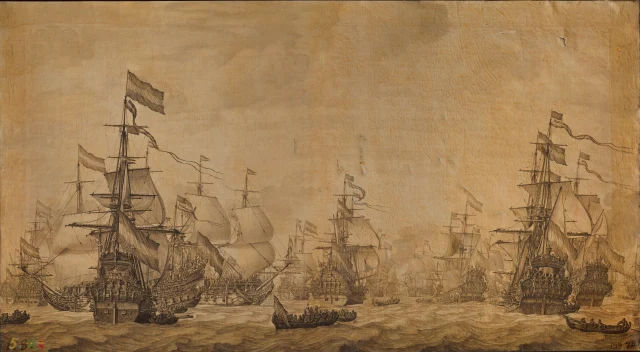 The Dutch Fleet under SailWillem van de Velde the Elder, 1672
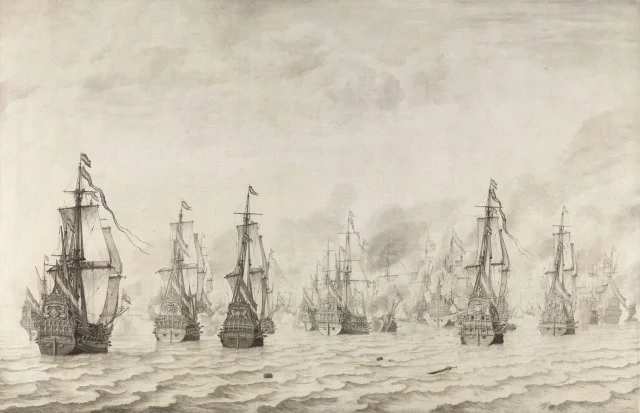 The Naval Battle against the Spanish near Dunkirk, 18 February 1639Willem van de Velde the Elder, 1659