William Degouve de Nuncques
1867–1935 · Belgian · Symbolism
The story
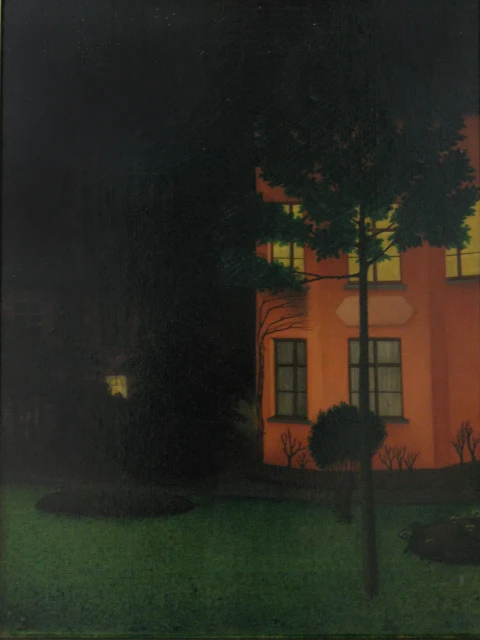
In the Kröller-Müller Museum hangs a picture of a house at night, its dark facade blank except for two windows lit from within, a still pond in front holding the reflection. It is called The Blind House, painted in 1892 by William Degouve de Nuncques, and it is often cited as an ancestor of René Magritte's famous scenes of a night street beneath a daylit sky.
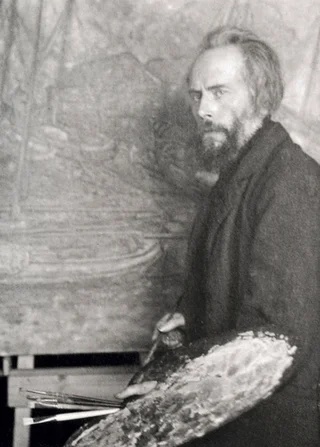
Degouve de Nuncques came to art almost sideways. Born in 1867 to an aristocratic French family that resettled in Belgium, he barely lasted at the Brussels academy and taught himself instead, learning most from sharing a studio with the Dutch symbolist Jan Toorop and the painter Henry de Groux. In 1894 he married Juliette Massin, herself a painter, who drew him into the circle of Symbolist poets, and he joined Les XX, the Brussels avant-garde group that showed the boldest new art of the day.
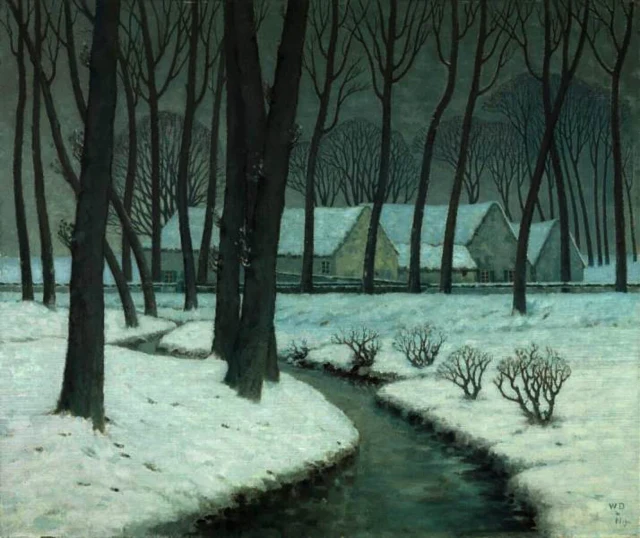
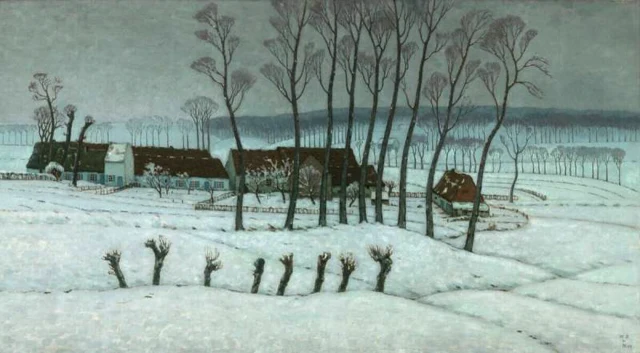
His real subject was the night, gardens and empty streets and still water lit by a strange, expectant glow. He went on painting quiet landscapes for decades, though after 1900 the visionary strangeness slowly drained from them. He died in 1935 in Stavelot, in the Ardennes hills where he had spent much of his life.