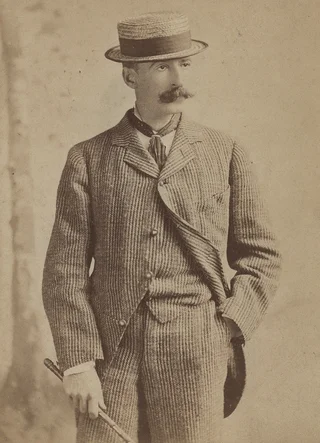
Winslow Homer
1836–1910 · United States · Realism
The story
Before he was a painter of the sea, Winslow Homer was a reporter with a pencil. In the early 1860s Harper's Weekly sent him to the front of the American Civil War, and he sketched the Union camps, the boredom and the sharpshooters, sending drawings north to be cut into wood engravings. He had almost no formal training and never really lost that reporter's directness.
After the war he painted American life in plain daylight: schoolchildren, farm girls, Black communities in the reconstructed South, men and women at the shore. A stay on the windswept coast of England in the early 1880s turned him toward harder subjects, fishermen and the danger of the water.
He settled at Prouts Neck in Maine, in a studio close enough to the Atlantic to feel the storms, and painted the surf breaking on rock with a weight few had managed before. In winters he escaped to Florida, Cuba, and the Bahamas, where he made brilliant watercolours of turquoise water and Black boatmen, some of the freshest works of his hand. He was still painting the Maine sea when he died there in 1910, at 74, alone in the studio on the rocks.
Works
9 works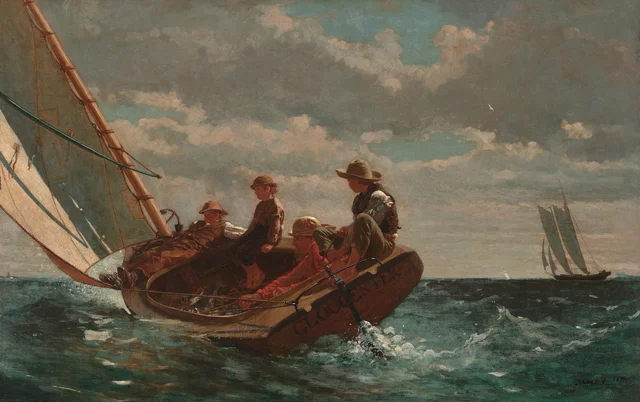 Breezing UpWinslow Homer, 1873
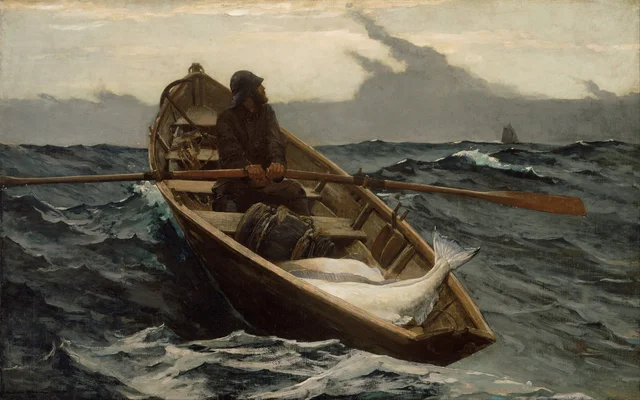 The Fog WarningWinslow Homer, 1885
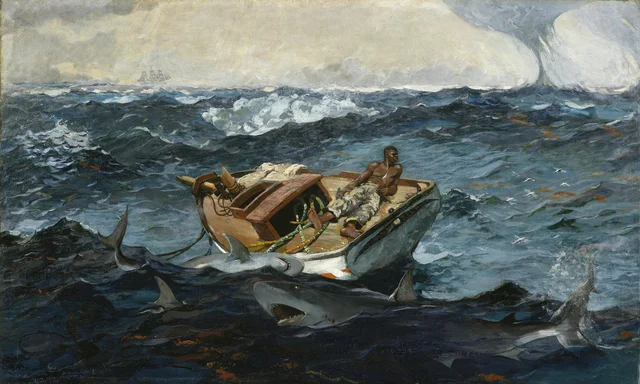 The Gulf StreamWinslow Homer, 1899
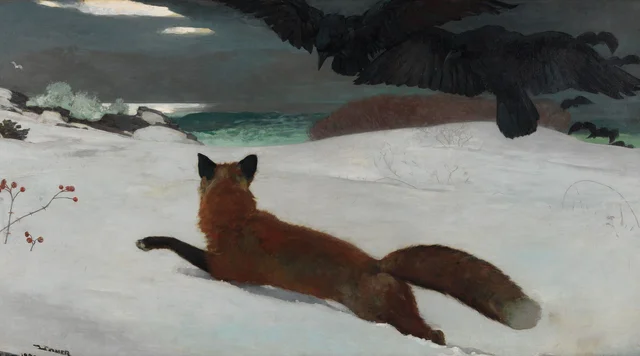 Fox HuntWinslow Homer, 1893
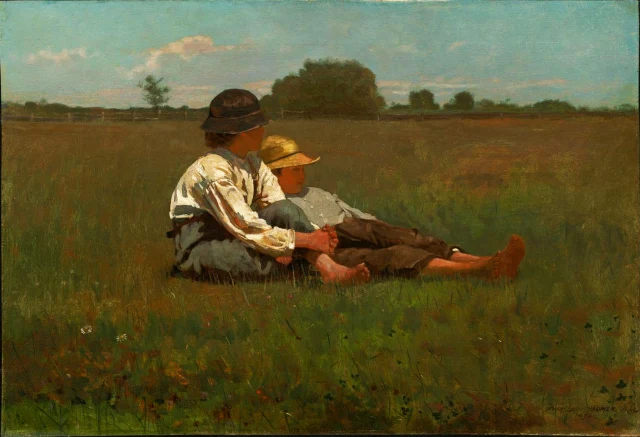 Boys in a PastureWinslow Homer, 1874
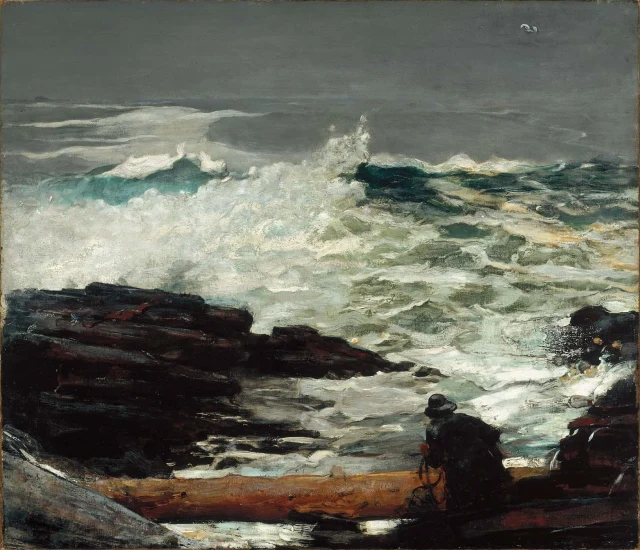 DriftwoodWinslow Homer, 1909
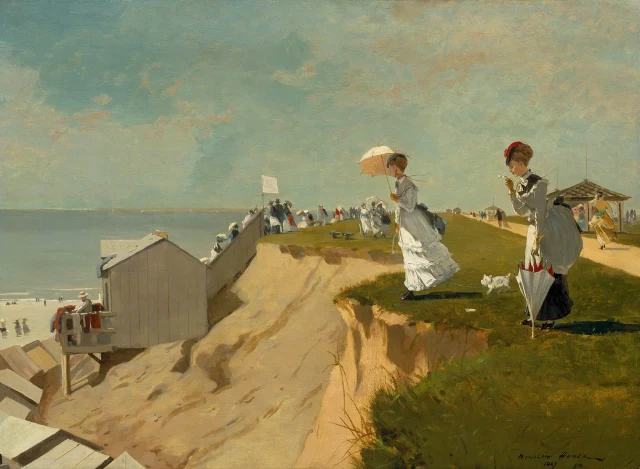 Long Branch, New JerseyWinslow Homer, 1869
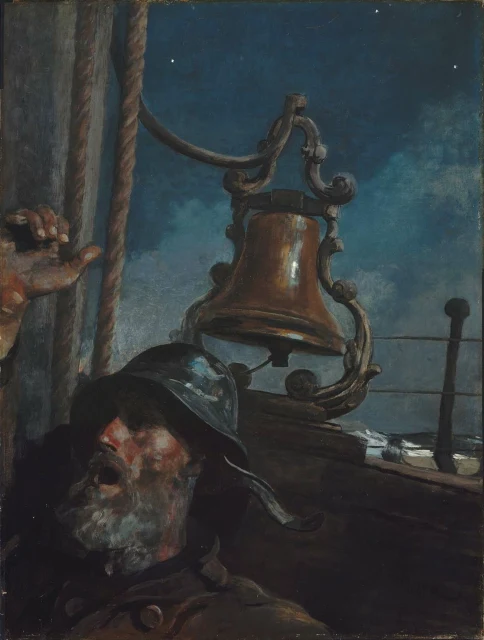 The Lookout – "All's Well"Winslow Homer, 1896
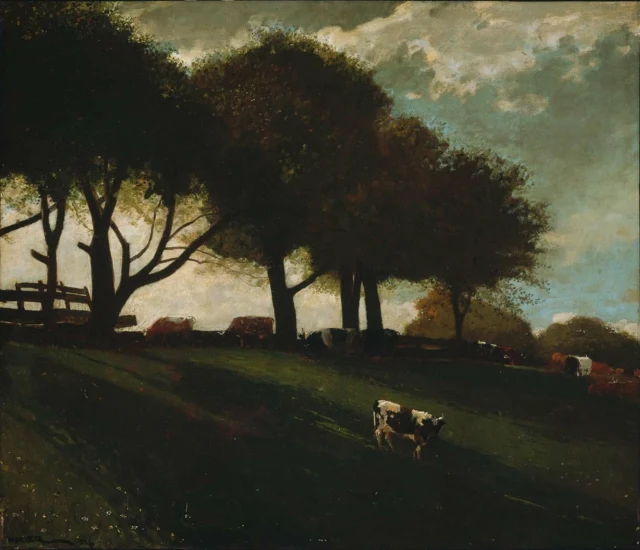 Twilight at Leeds, New YorkWinslow Homer, 1876