Witold Pruszkowski
1846–1896 · Russian Empire · Symbolism
The story
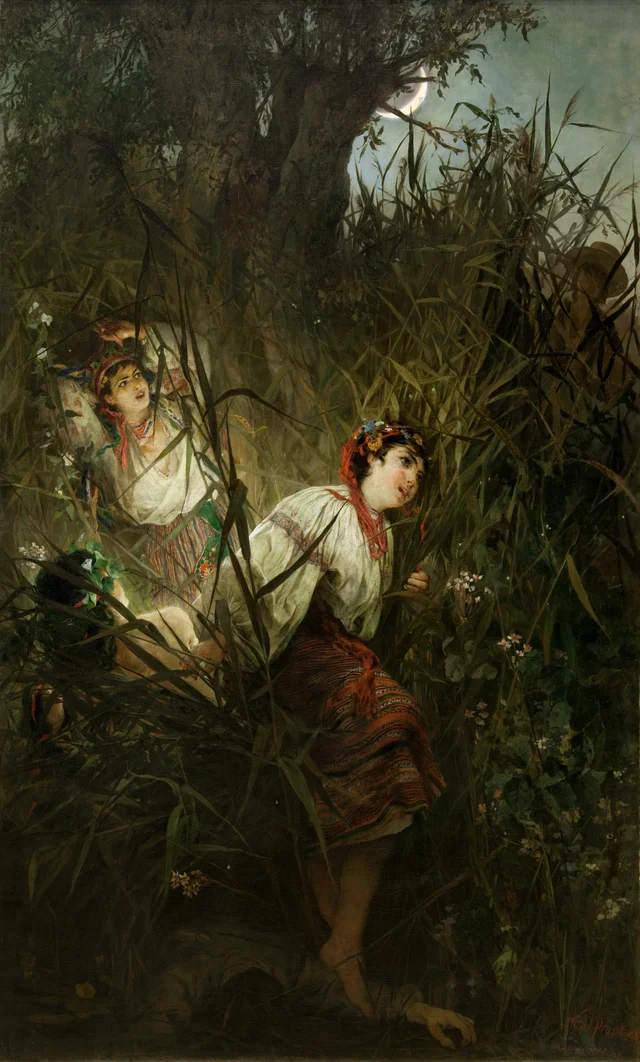
Rusałki, painted in 1877 and now in the National Museum in Kraków, takes its subject from Slavic folk belief. Rusałki are water spirits, in many tellings the souls of drowned girls who come out of rivers on summer nights. Witold Pruszkowski built much of his work on that ground between village life and the uncanny, painting peasants, legends and folk superstitions in a romantic, dreamlike key.
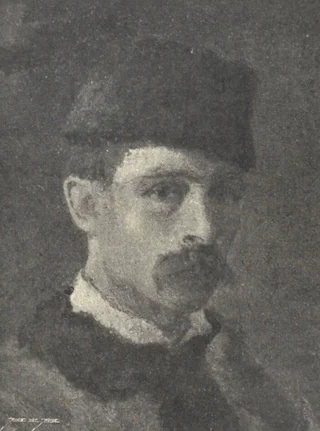
His route there was unusual. Born in 1846 in Czeczelnik, a village in Podolia, he grew up in Odessa and Kyiv and took his first drawing lessons in Paris from Tadeusz Gorecki, the son-in-law of the poet Adam Mickiewicz. He went on to the Munich Academy and from 1872 studied in Kraków under Jan Matejko, the leading Polish history painter. The Romantic poets Juliusz Słowacki and Zygmunt Krasiński and the music of Chopin fed many of his visions, which he worked in oil and pastel.
In 1882 he settled in Mników, a village near Kraków, and showed regularly in Kraków, Warsaw and Lviv. Sielanka, a pastoral scene from 1880, is also in the Kraków museum. Ill for several years, he disappeared in 1896 while visiting family in Kołomyja, a town in Galicia, was found exhausted at the railway station in Budapest, and died in hospital there two days later.