Władysław Podkowiński
1866–1895 · Congress Poland · Impressionism
The story
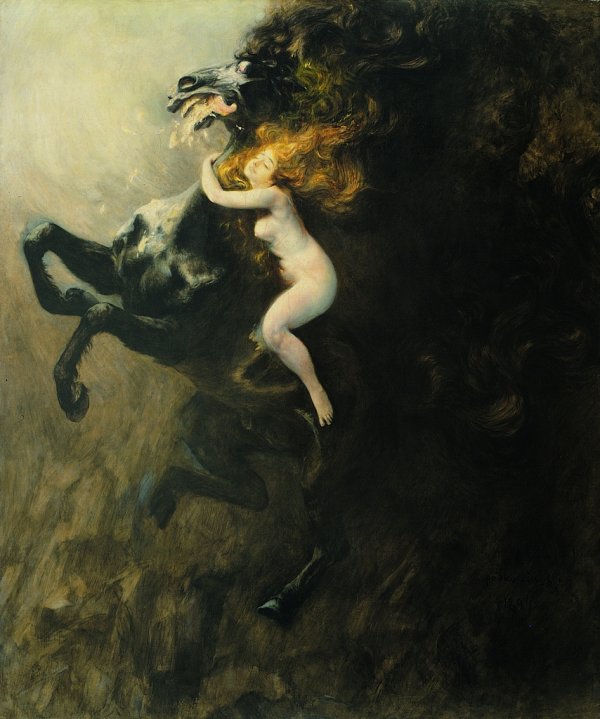
On a spring morning in 1894, a young painter walked into the Zachęta gallery in Warsaw, stood before his own most famous canvas, and slashed it with a knife. The painting was Frenzy of Exultations, a naked woman thrown back on a wild-eyed black horse, and in the weeks it had hung some 12,000 people had filed past it in a mix of shock and fascination.
The painter was Władysław Podkowiński, and he was 28 and dying. He had trained in Warsaw, then travelled to Paris in 1889, where the Impressionists, above all Monet, turned him toward pure colour and light. He is often credited with bringing Impressionism home to a Poland then carved up between three empires. Frenzy was a turn away from that, toward the darker, dreamlike Symbolism of his last years.
His reasons for destroying it were never explained, and gossip tied the picture to a woman he loved without return. He died of tuberculosis a year later, in 1895, and the canvas was repaired after his death. It hangs in Kraków today.