Władysław Ślewiński
1856–1918 · Congress Poland · Pont-Aven School
The story
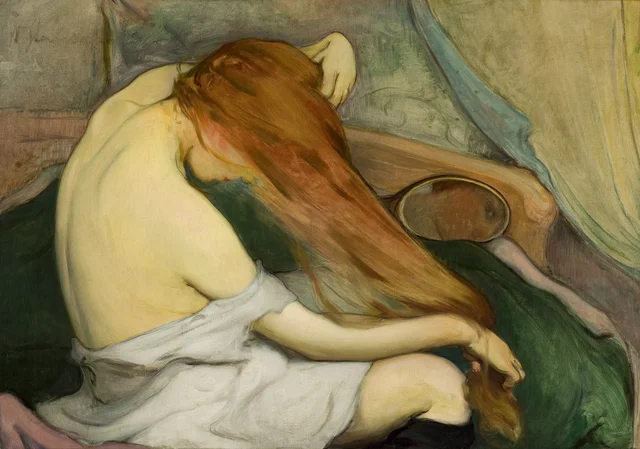
A Polish landowner who had run his inherited estates into the ground fled to Paris in 1888 to escape the tax collectors, and there, already in his thirties, he decided to become a painter. His name was Władysław Ślewiński, and within a year he had fallen in with Paul Gauguin, the French painter then gathering younger artists around him.
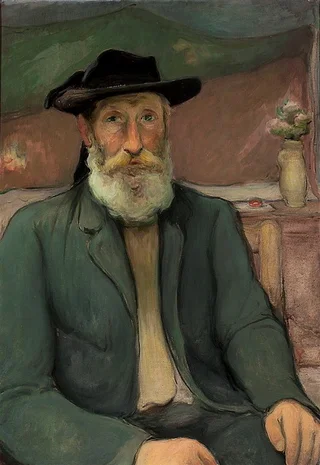
Ślewiński followed that circle to the fishing villages of Pont-Aven and Le Pouldu on the coast of Brittany, in northwest France, where Gauguin and his friends were flattening their pictures into bold shapes and plain areas of colour, a manner they called synthetism. Ślewiński took the lesson and made something quieter of it, still lifes, Breton women and grey coastal light, a personal version of the style that Polish art history counts as part of Young Poland, the movement that renewed the country's art around 1900.
He went home for a few years after 1905 and even ran a painting school in Warsaw, then returned to Brittany for good, living in a house he called his castle at Doëlan. He died in Paris in early 1918, having spent almost 30 years painting the same Breton coast.