Wojciech Stattler
1800–1875 · Poland, Russian Empire · Romanticism, Academic art
The story
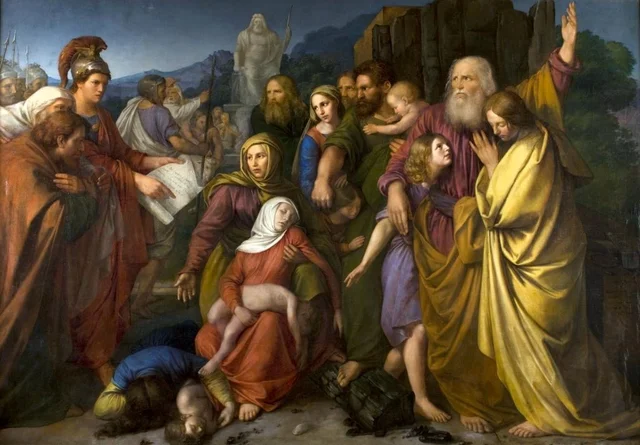
On and off for 12 years from 1830, Wojciech Stattler worked on one large canvas, The Maccabees. Its subject comes from the Bible, the Jewish revolt against a Seleucid king in the 2nd century BC. Poles saw a story closer to home. The poet Juliusz Słowacki called it a Polish epic in Roman costume, a small nation rising against an empire, painted during and after the November Uprising against Russian rule. In the 1840s Stattler took it to the Paris Salon, where it won a gold medal, and today it is in the National Museum in Kraków.
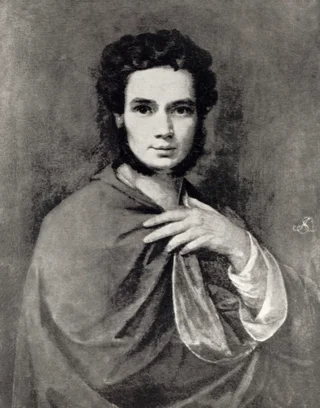
Stattler was born in Kraków in 1800 into a family of Swiss origin, and in 1818 he left for Rome. He studied at the Academy of St Luke and spent close to a decade in Italy, taking lessons from the painter Vincenzo Camuccini and the Danish sculptor Bertel Thorvaldsen. Adam Mickiewicz, the national poet, was a friend from those Roman years and came to his wedding there in 1830.
From 1831 he taught at the School of Fine Arts in Kraków for 26 years, and he brought in drawing from the live and the nude model. Among his students in the early 1850s was the teenage Jan Matejko, who became the best-known Polish history painter. Stattler died in Warsaw in 1875 and is buried in the city's Powązki Cemetery.