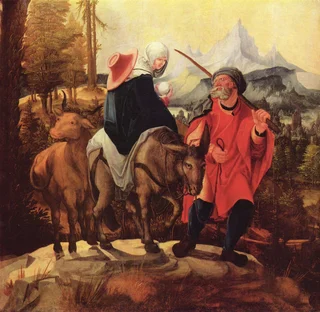
Wolf Huber
1553 · Holy Roman Empire · Danube School, Renaissance
The story
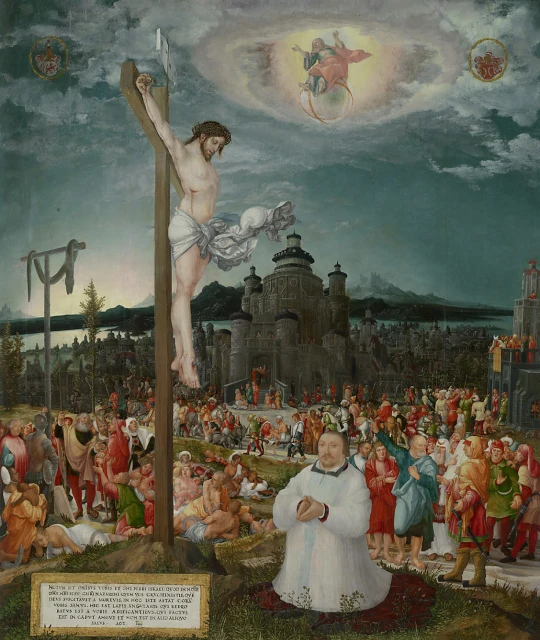
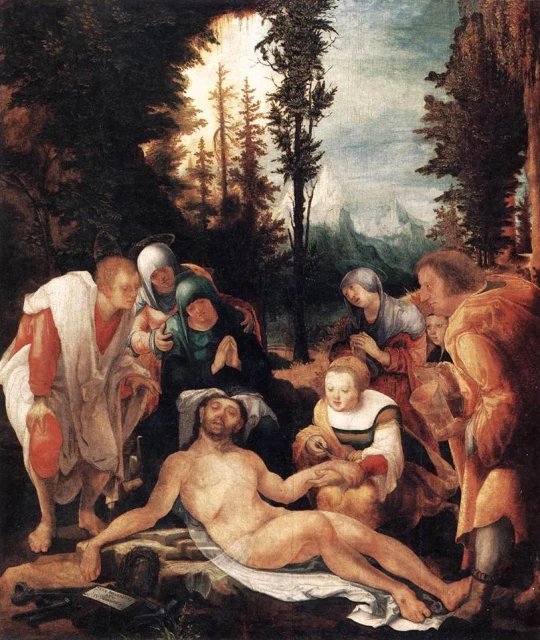
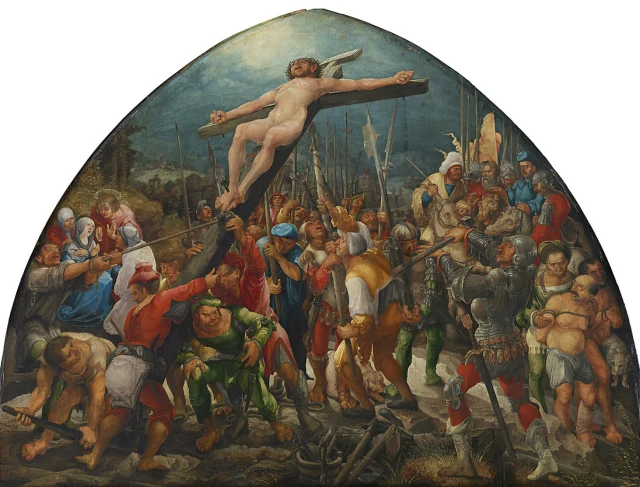
Around 1500, along the Danube between Bavaria and Austria, a handful of artists began doing something new: drawing forests, river valleys and mountains as subjects in their own right, where before such scenery had only filled the background behind saints. Wolf Huber, born in Feldkirch in what is now western Austria, became one of the two masters of that circle, the Danube School, ranked just behind its leading figure, Albrecht Altdorfer.
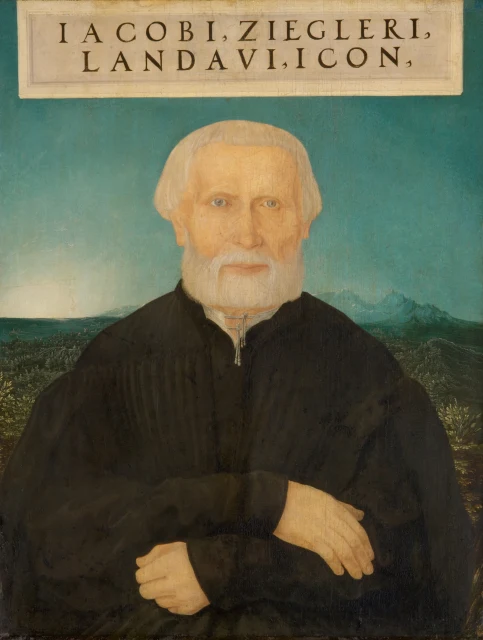
By 1515 Huber had settled in Passau, the cathedral town where the Inn meets the Danube, and there he spent the rest of his life as a court painter, first to a Bavarian duke who ran the local diocese and later to the prince-bishop. He kept a busy workshop, designed buildings and cut woodcuts, yet it is his pen drawings of the countryside that carry his name. Some are among the earliest European landscapes made as finished works in themselves, a single view of hills and water with no story attached.
In 1523 he drew the town of Feldkirch, his birthplace, looking back at the place he had left decades before. Huber died in Passau in 1553, still holding the bishop's post.