Workshop of Anthony van Dyck
Spanish Netherlands · Baroque painting
The story
On 22 March 1620 Rubens signed a contract in Antwerp for 39 ceiling paintings for the Jesuit church there. He would supply the oil sketches and his assistants would do the painting, and one assistant was named in the document, a 21-year-old called van Dyck. The formula at the head of this record describes the position he himself once held.
A workshop picture was made in the master's rooms, by hands he had trained, and sold under his name. That was how a busy shop met demand the master alone could not cover. An eyewitness account of van Dyck's studio survives, left by Everhard Jabach, a Cologne banker and collector who sat to him in London in the 1630s. Each sitter was given an hour. Van Dyck set the pose, made notes on the clothes and passed the canvas to assistants who carried it forward, and he went over the whole picture himself at the end.
One canvas under this heading, at the Palatina, is a Rest on the Flight into Egypt, 195 centimetres across, the Holy Family halted at the roadside with a ring of angels dancing beside them. It repeats a composition van Dyck worked out in Antwerp around 1630. The best-known version of it, the one with partridges in the foreground and animals painted by his colleague Paul de Vos, was made for a Jesuit sodality of Antwerp bachelors and is now in the Hermitage. The Florentine picture carries inventory number 437, and its record names no individual hand at all.
Works
6 works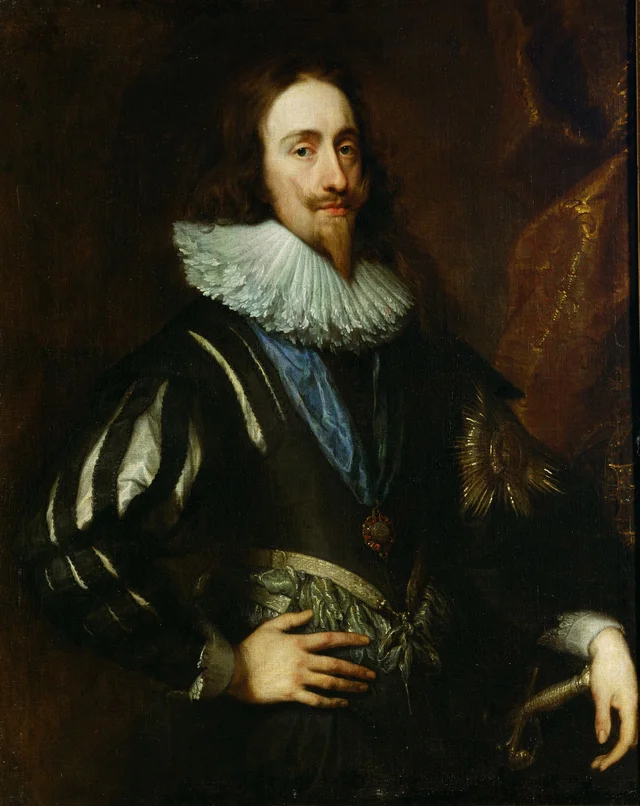 King Charles I of England (1600-1649), three-quarter portraitWorkshop of Anthony van Dyck, 1632
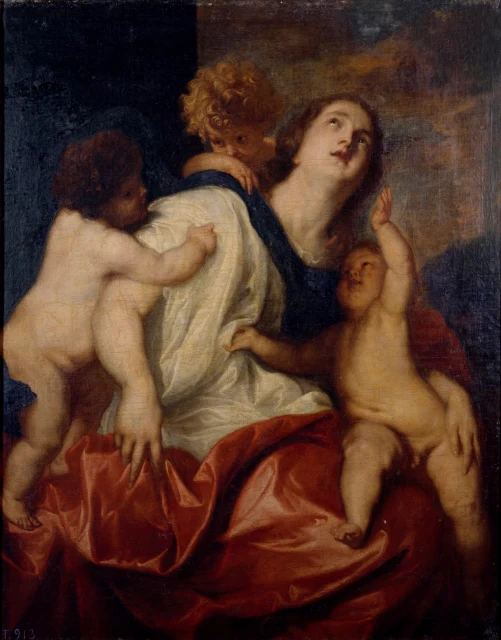 CharityWorkshop of Anthony van Dyck
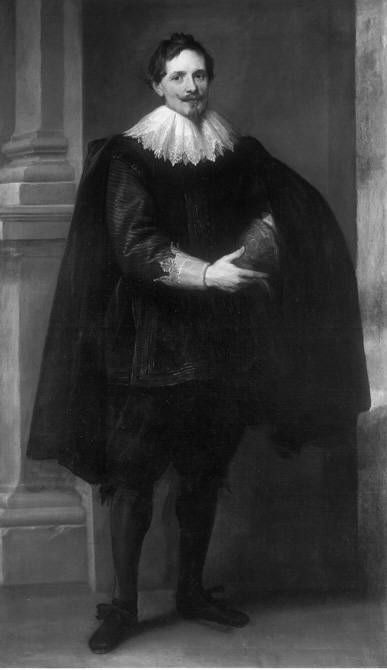 Portrait of a GentlemanWorkshop of Anthony van Dyck, 1630
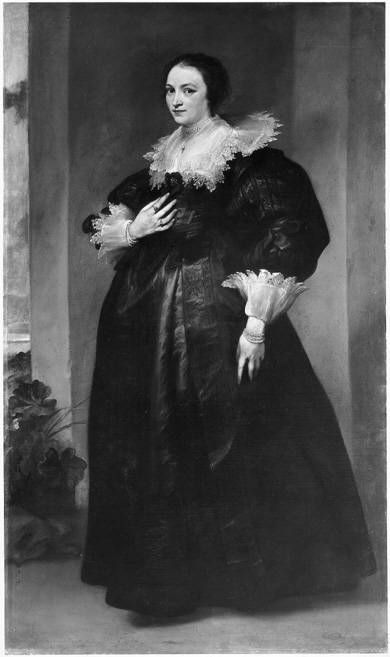 Portrait of a LadyWorkshop of Anthony van Dyck, 1630
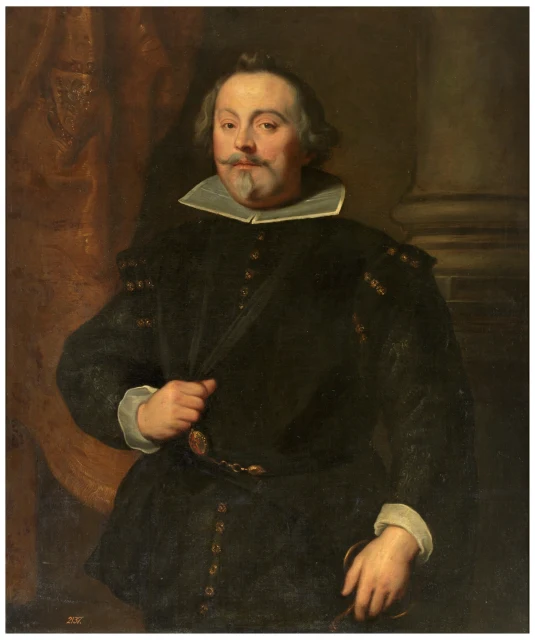 Portrait of Francisco de Moncada marqués de AytonaWorkshop of Anthony van Dyck, 1634
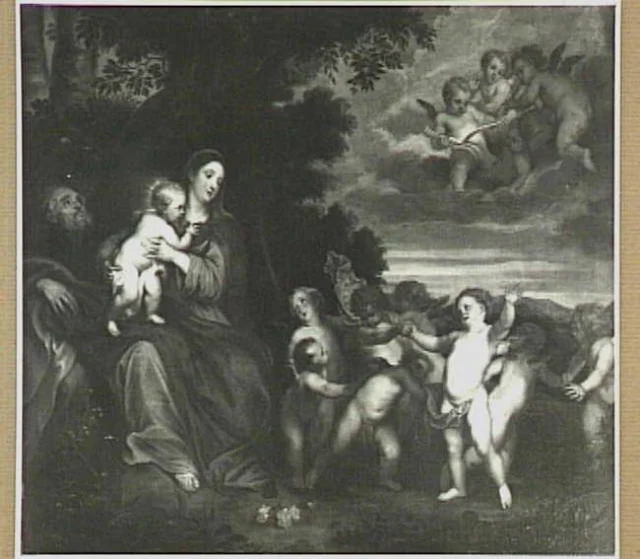 Rest on the Flight into EgyptWorkshop of Anthony van Dyck, 1630