Adoration of the Magi
Details
The story
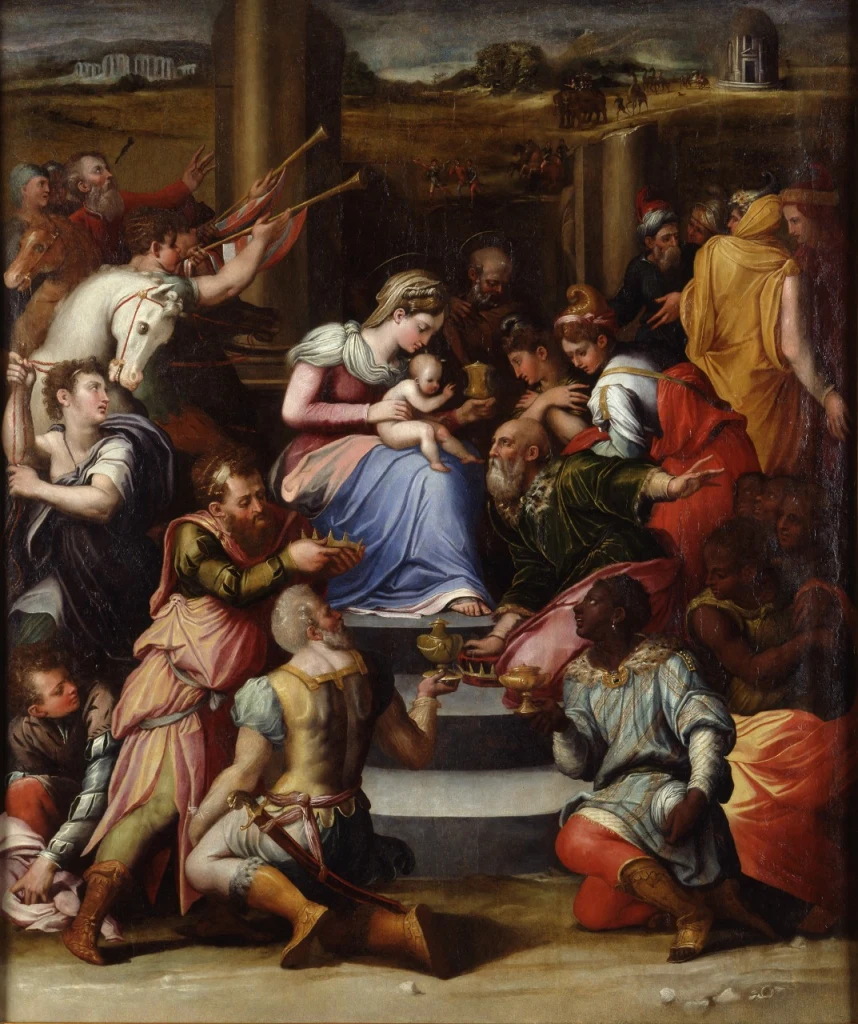
In the 1540s Giorgio Vasari kept working for one religious order, the Olivetans, Benedictine monks in white habits named after their mother house of Monte Oliveto in Tuscany. He decorated their monasteries of San Michele in Bosco in Bologna and Monteoliveto in Naples, and for their church of Santa Maria in Scolca at Rimini, now called San Fortunato, he painted a large Adoration of the Magi for the high altar.
The Vatican dates this smaller altarpiece between 1540 and 1545 and credits it to Vasari and his workshop. The museum sets its bright colours, theatrical poses and long tapering fingers beside that Rimini picture. It compares the landscape of classical ruins with a predella scene of the altarpiece Vasari began in 1539 for the monastery of Camaldoli, in the Tuscan mountains, and with a Holy Family he painted in Venice in 1541, now in Los Angeles. At some point the paint layer was taken off its wooden panel and laid down on canvas, which is how the picture survives.