Francisco de Zurbarán · PD
Agnus Dei
Details
The story
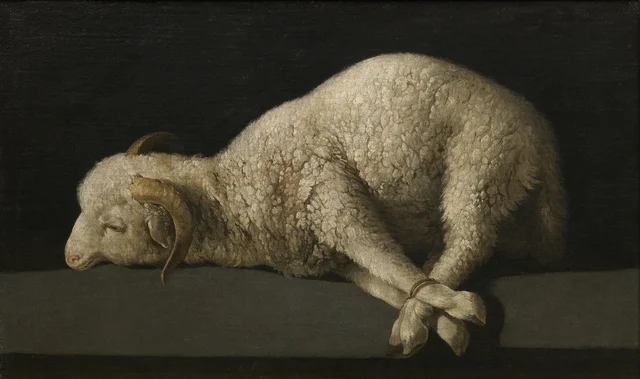
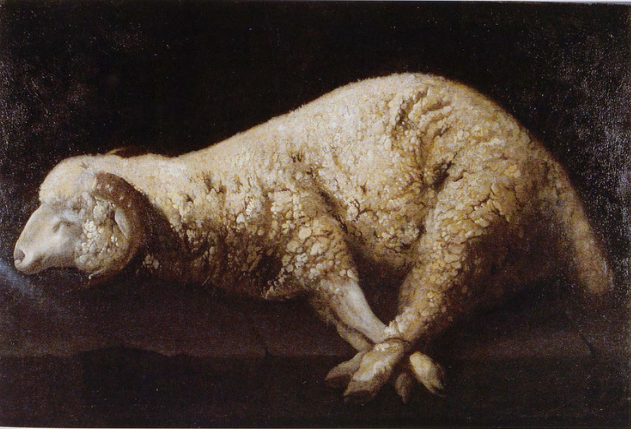
In 1632 Zurbarán was working in Seville, mostly on large altarpieces for its monasteries and convents, and that year he also signed and dated this canvas of a single animal. It is a ram lying on a ledge against a dark ground, its four feet bound together. There is no halo and no inscription. He painted the subject several times in the 1630s, and only two of the versions carry a halo or the Latin words that name the animal as the Lamb of God. That has divided the experts. The French art historian Odile Delenda, who catalogued his work, reads most of them simply as sheep with tied feet. The Prado, which owns a later version, argues that in 17th-century Spain the link between a bound lamb and the sacrificed Christ was so familiar that viewers would have seen it at once. This canvas stayed little known in a private collection in Barcelona until it was restored and shown at the Bilbao Fine Arts Museum in 2004.