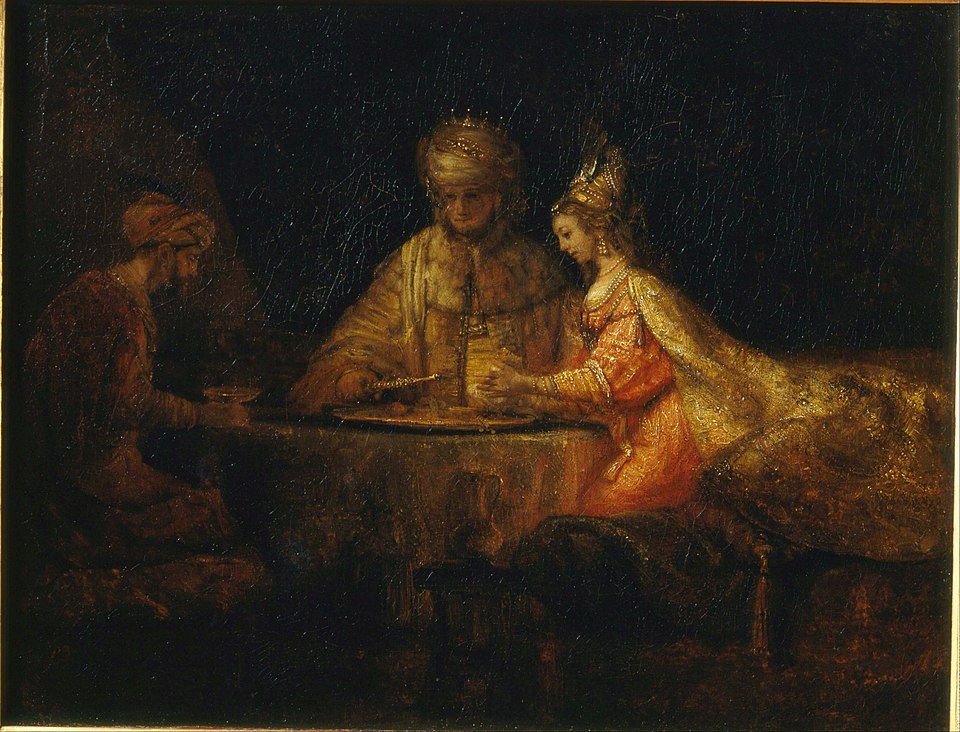
Rembrandt, Ahasuerus and Haman at the Feast of Esther, 1660. Wikimedia Commons. · PD
Ahasuerus and Haman at the Feast of Esther
Details
The story
By 1660 Rembrandt was in his fifties, out of fashion and deep in money trouble, having lost his house and his collection to his creditors a few years before. The confident theatre of his younger biblical scenes is gone here. Three figures sit at a dim table. Queen Esther has just told her husband, the Persian king Ahasuerus, that his own minister Haman is plotting to destroy her people. The king's lips are pressed tight in rising anger. Esther lowers her hands, her part done. And Haman, off to the side and already half swallowed by the shadow, sits with the look of a man who knows he is finished. Rembrandt tells the whole reversal through three faces and the distances between them, with the banquet barely sketched around them. Catherine the Great bought the painting in 1764, and since 1924 it has hung in the Pushkin Museum in Moscow.