Edgar Degas · PD
Alexander and Bucephalus
Details
The story
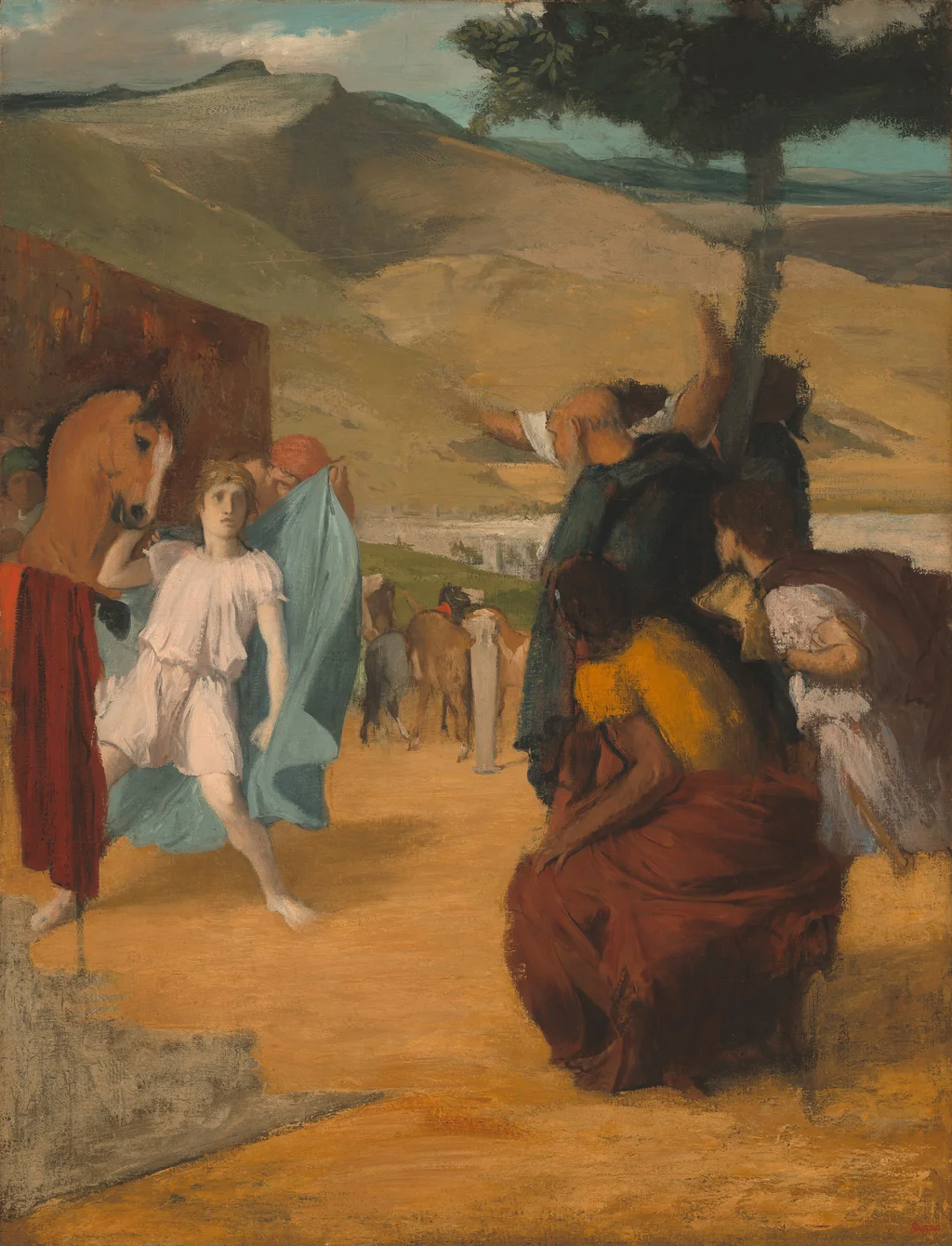
Around 1861 Degas still meant to make his name as a history painter, and for this canvas he went to Plutarch's life of Alexander the Great. A horse called Bucephalus had been brought to King Philip of Macedon, and none of his men could manage it. The young Alexander saw that it shied at its own shadow, turned its head towards the sun and rode it. Degas shows the prince stroking the horse's head, facing a group of onlookers under a tree. Behind that group rise a pair of arms whose head, the National Gallery of Art notes, is missing or was painted over. That same year Degas stayed with a school friend in Normandy, near the national stud at Le Pin, and made his first studies of horses from life. The picture stayed in his studio until the sale after his death in 1918, where it was catalogued by mistake as Achilles and Bucephalus.