Peter Paul Rubens · PD
Allegory of Peace
Details
The story
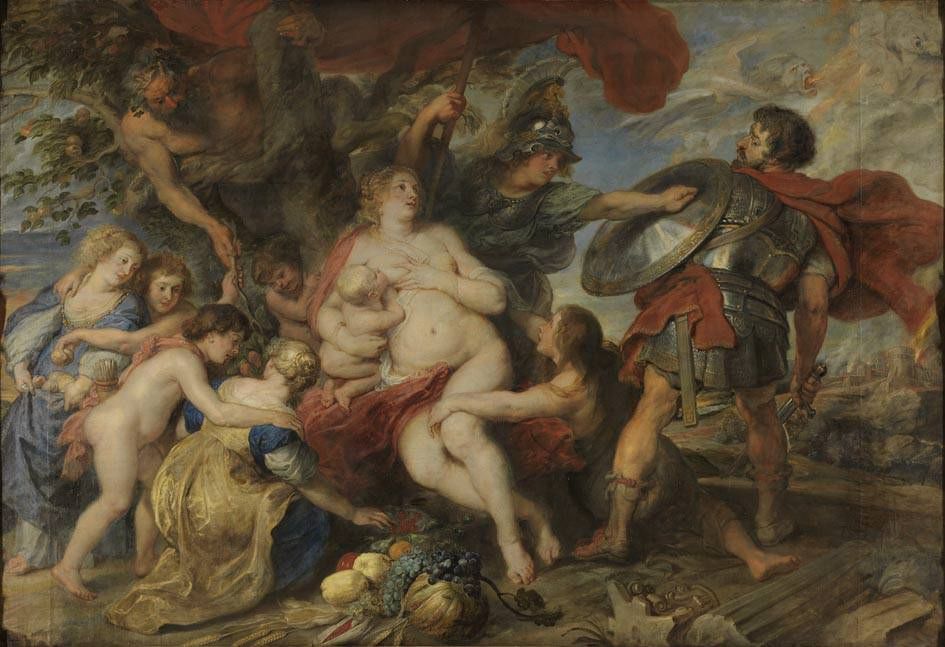
In 1630 Rubens left London with the talks between Spain and England well advanced, a treaty still months away. This huge canvas, painted around that time, returns to the allegory of peace and war he had made in London, and changes its tone. Here the threat is not yet over. Mars in full armour still holds the right side of the picture as Minerva, goddess of wisdom, drives him away. Against all that metal stands the bare, vulnerable body of Peace. Broken architecture and a burning town show what war leaves behind, while women and children on the other side enjoy what peace allows, among them a mother nursing her child. Scholars do not agree on whose hand this is. A catalogue for an exhibition on the Peace of Westphalia called it the work of another painter, built on Rubens's idea and perhaps made under his supervision. The Alte Pinakothek catalogues it as Rubens, around 1630 to 1632.