Giuseppe Arcimboldo · PD
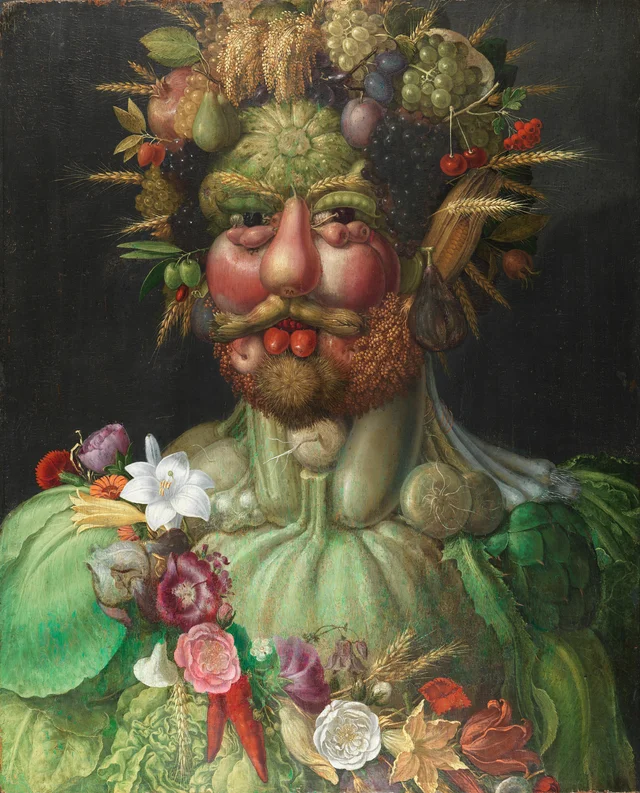
Allegory of Summer
Details
The story
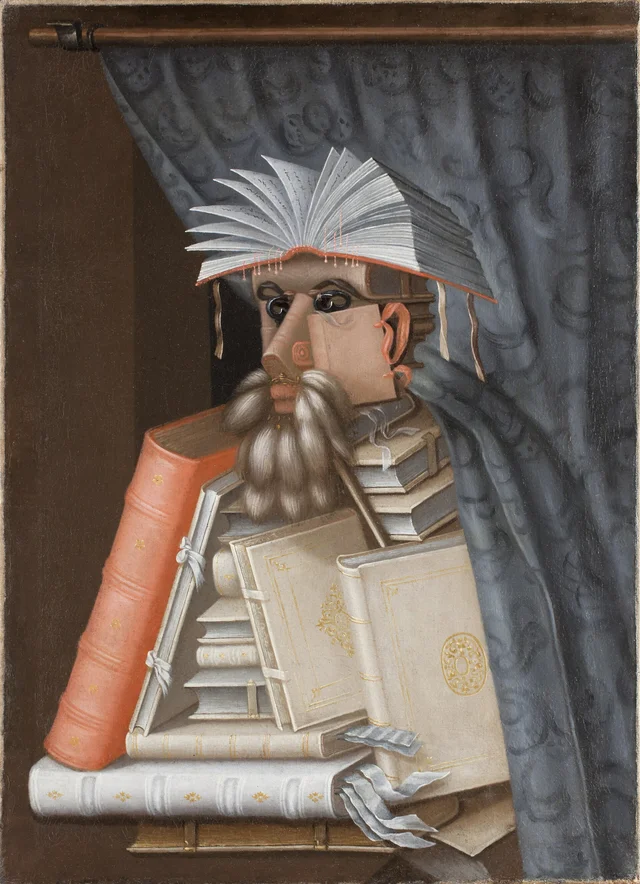
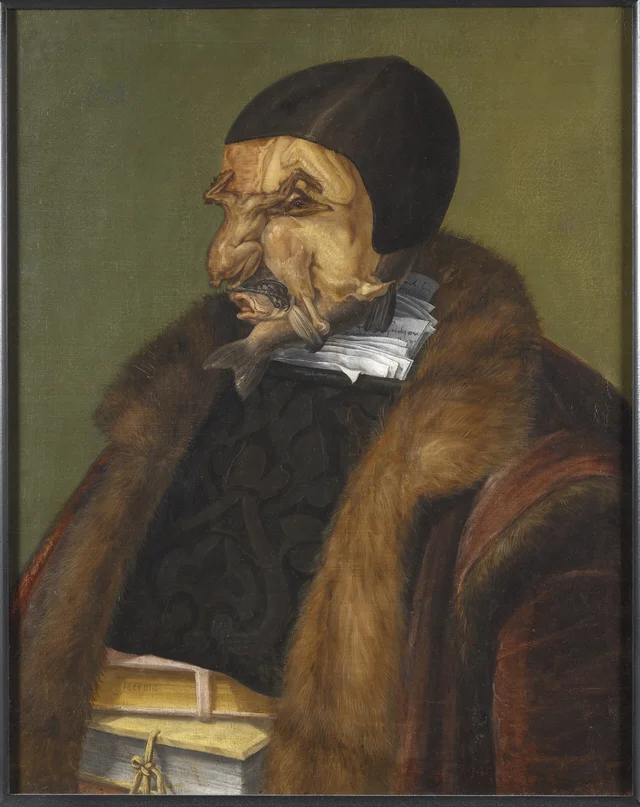
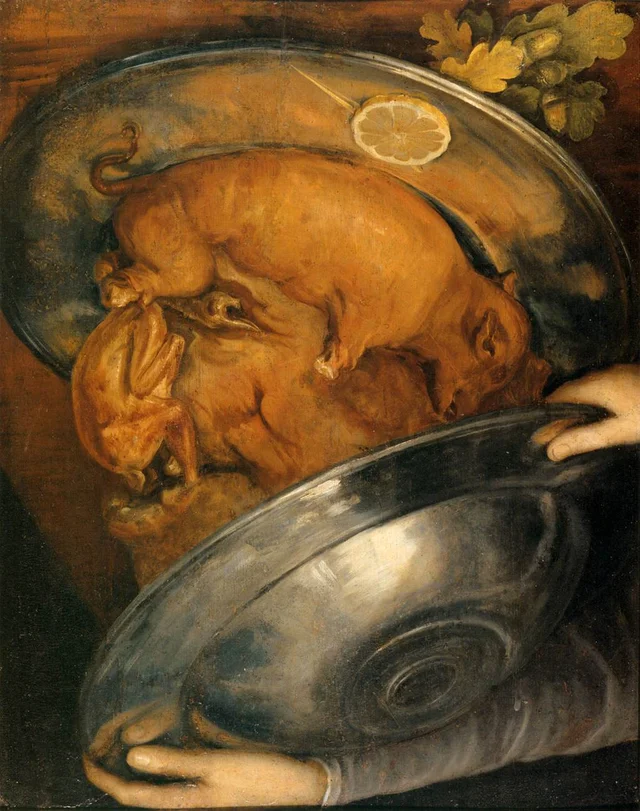
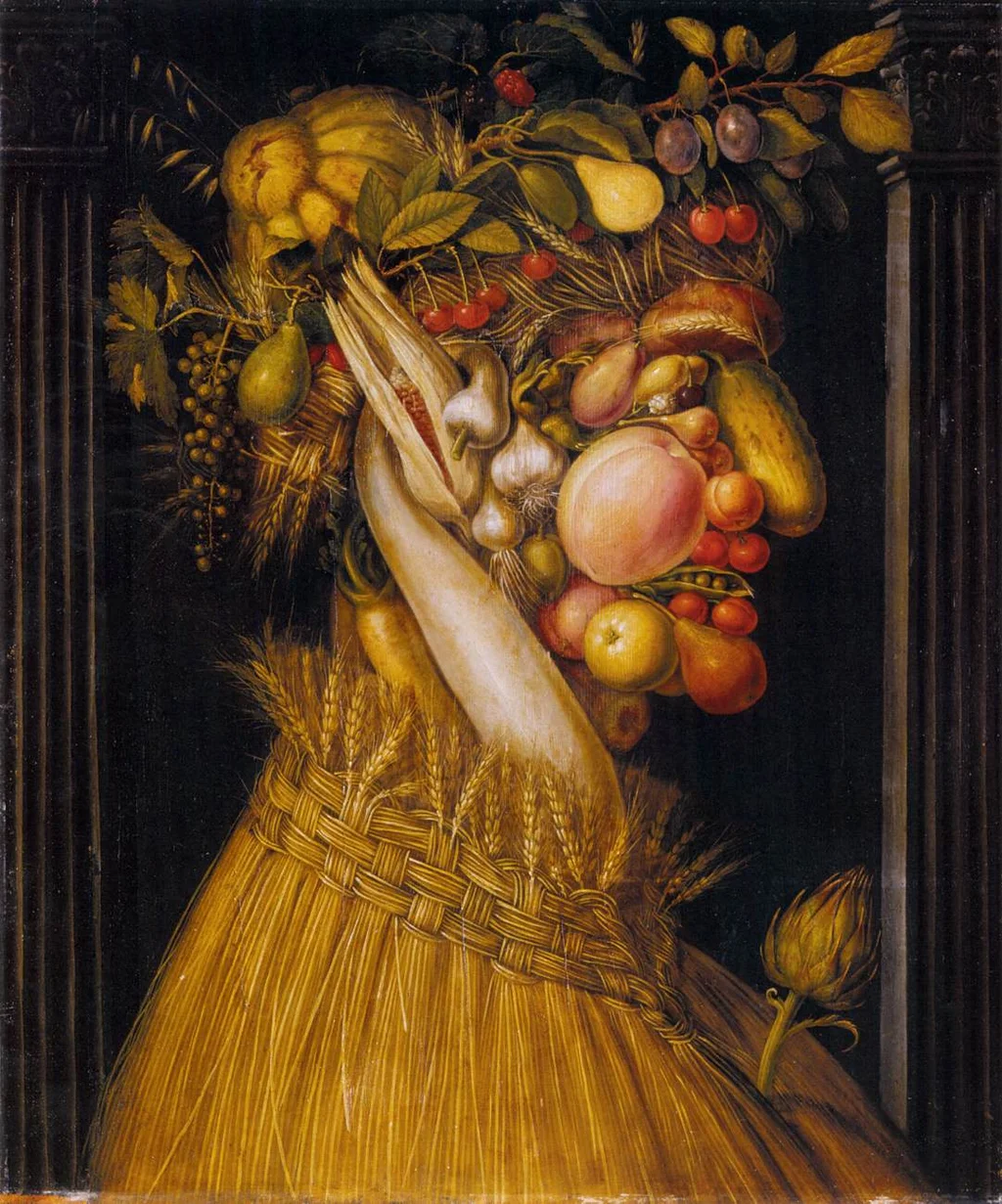
Around 1480 young painters in Rome began lowering themselves on ropes into the buried rooms of Nero's Golden House. The ceilings they found, crowded with creatures that were half human and half plant, gave Europe a new kind of ornament, named grotesque after those cave-like rooms. By the middle of the 16th century such hybrids covered palace walls, prints and pottery across Italy. The museum sets Arcimboldo's heads in this line, as a continuation of the ancient taste for fantastic composite beings. His version follows a stricter rule. In Summer every part of the face comes from a single season, from the produce of the hot months. The panel, painted in oil on wood, is a little under 70 centimetres high, and the museum dates it to around 1555 to 1560.