Claude Monet · CC-BY-SA-4.0
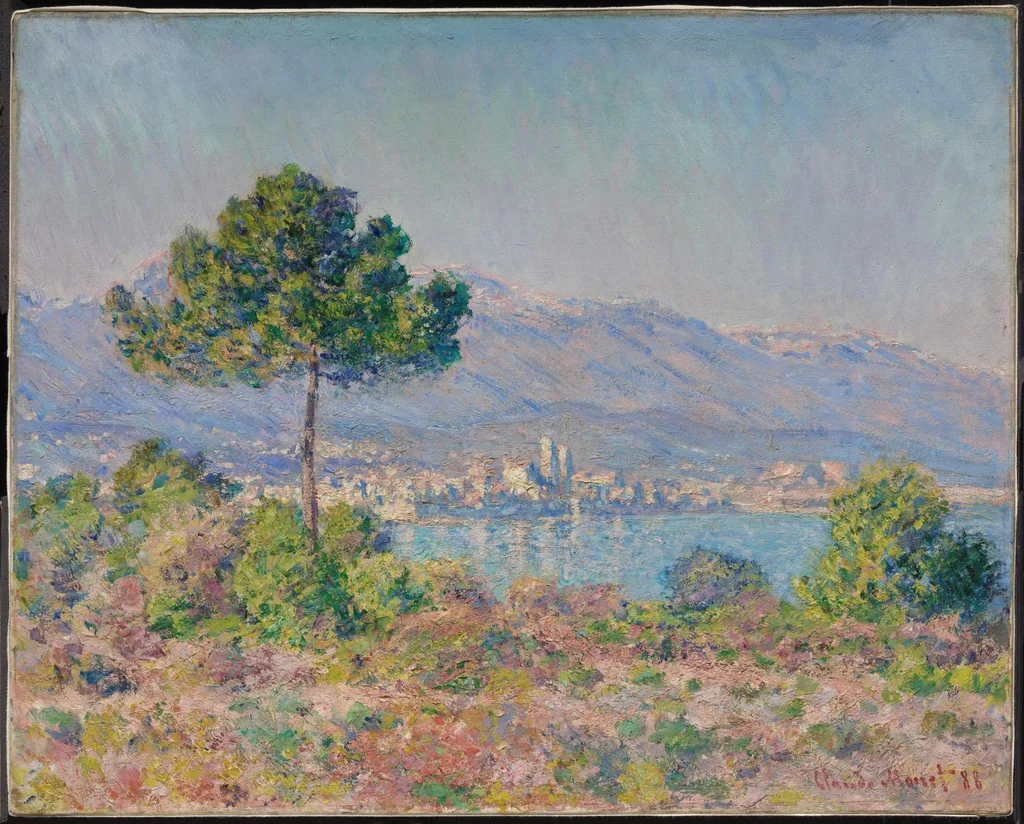
Antibes Seen from the Plateau Notre-Dame
Details
The story
On the high ground of Cap d'Antibes, the Garoupe plateau, stands the chapel of Notre-Dame, where the sailors of Antibes still carry their patron's statue in procession every July, and whose walls are hung with ex-votos, small offerings of thanks for rescue from shipwreck and other dangers. In 1888 Monet looked from that plateau back across the bay at the town. The old fort of Antibes was his favourite motif in those months, yet here, as the Museum of Fine Arts notes, he reduced it and the buildings around it to thick, rhythmic touches of yellow and blue, more interested in sunlight and shadow than in architecture. The whole stay produced pale pictures, pink and light blue, in a softened light that holds each canvas together. This one reached Boston quickly. In 1889 the Paris dealer Georges Petit lent it to the large Monet exhibition at his own gallery. That September he sold it to Knoedler, a New York firm, and on 1 November 1890 the Boston gallery Doll and Richards bought it from Knoedler and sold it the same day to Joseph Foxcroft Cole, a Boston landscape painter who had trained in France.