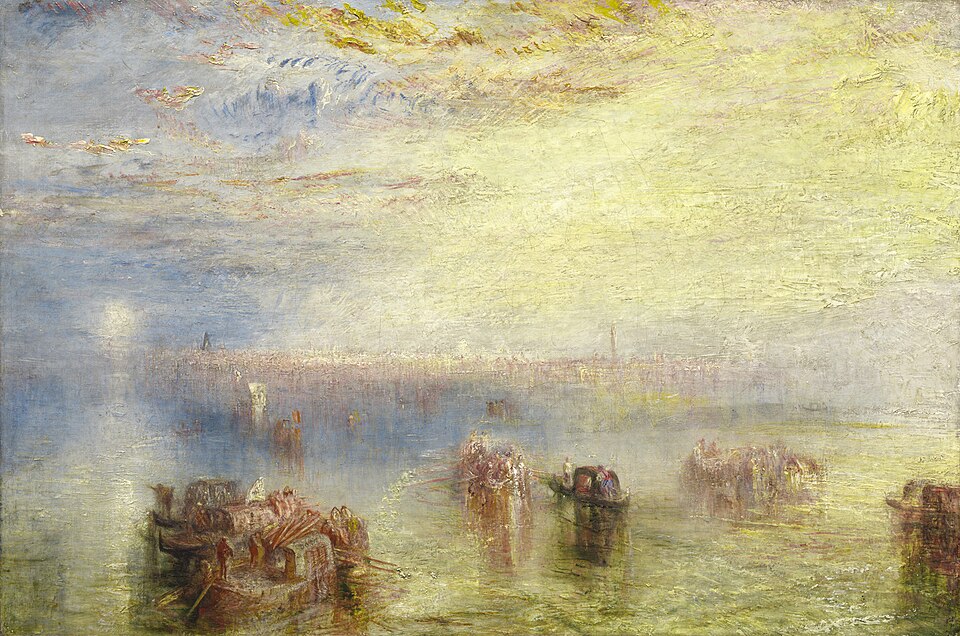
J. M. W. Turner, Approach to Venice, 1844. Wikimedia Commons. · PD
Approach to Venice
Details
The story
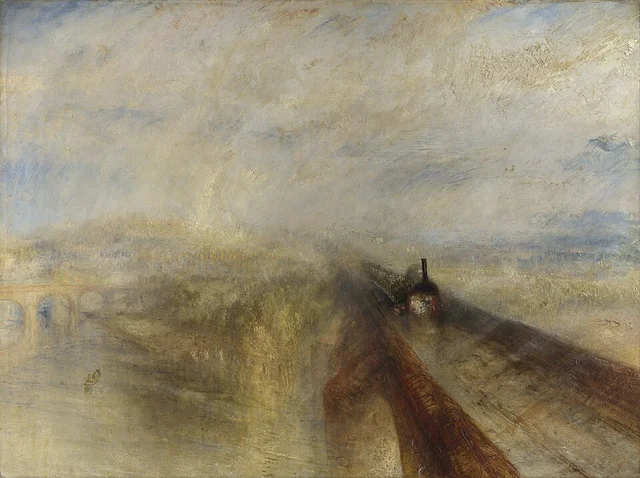
The Royal Academy exhibition of 1844 held two Turners that look like they belong to different centuries. One was Rain, Steam, and Speed, a train coming across a bridge at full tilt. The other was this, Venice at sunset seen from the north across the lagoon, a city that had lost its republic to Napoleon in 1797 and was by then governed from Vienna. Turner had been there three times, the last in 1840, and painted his Venices back in London from watercolour notes. He hung this one with a couplet from Byron's Childe Harold's Pilgrimage, the poem that had taught English travellers to see the place as a beautiful wreck. John Ruskin, who had published the first volume of Modern Painters the year before, called it the most perfectly beautiful piece of colour he had seen produced by human hands, by any means or at any period.