Athaliah Expelled from the Temple
Details
The story
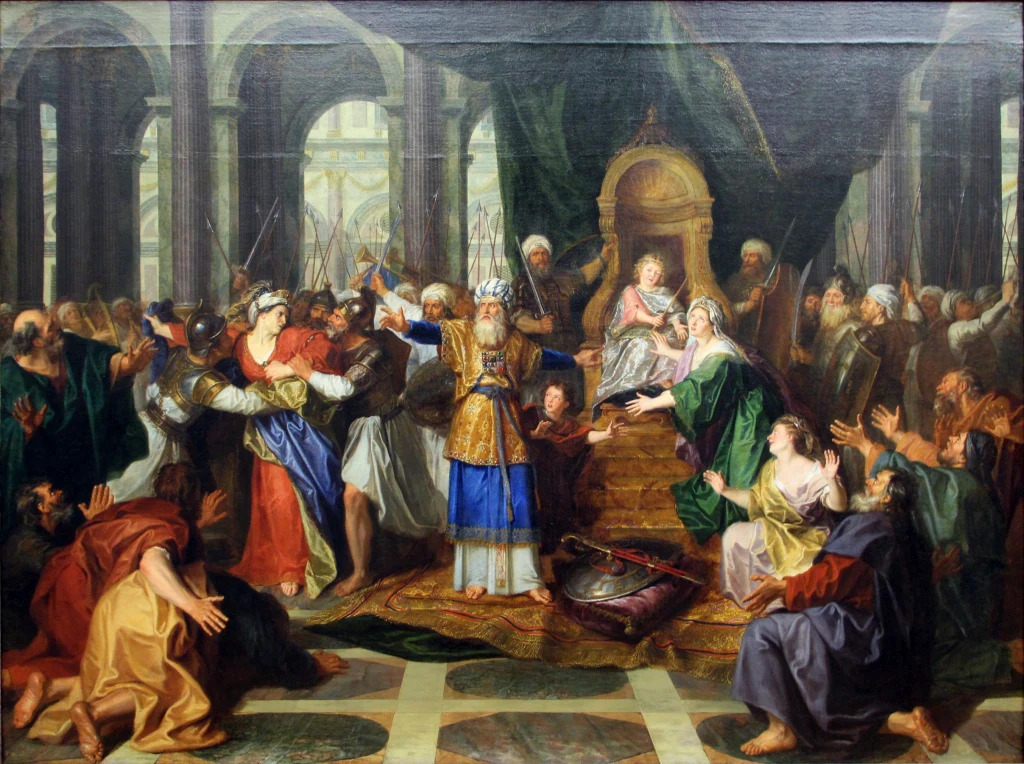
In 1696, when Antoine Coypel painted this, hardly anyone had seen Racine's Athalie on a stage. The play was written for the girls of Saint-Cyr, the school founded by Madame de Maintenon, the king's secretly married wife, and in January 1691 they performed it at Versailles without costumes or scenery. It was given no more than three times and was otherwise known from the printed text.
Coypel supplied the staging. This is the last act. Athaliah, the queen who worshipped Baal and believed she had killed every heir of the royal line, has just found her grandson Joash alive and seated on the throne in the Temple, and the high priest, Joad in Racine's play, orders her driven out. The Louvre points to the figures set out in groups like actors, the heightened faces and gestures, and colour in the manner of Rubens. Coypel probably took his starting point from the frontispiece of the printed play.
He painted it for the young duc de Chartres, the king's nephew. In January 1697 the duke had it carried into the Grand Appartement at Versailles to show Louis XIV, and the court paper, the Mercure galant, reported that the king praised it. Nineteen years later, with the same duke governing France as Regent for the child Louis XV, the Comédie-Française finally put Athalie on the public stage.