Aurora Triumphing over Night
Details
The story
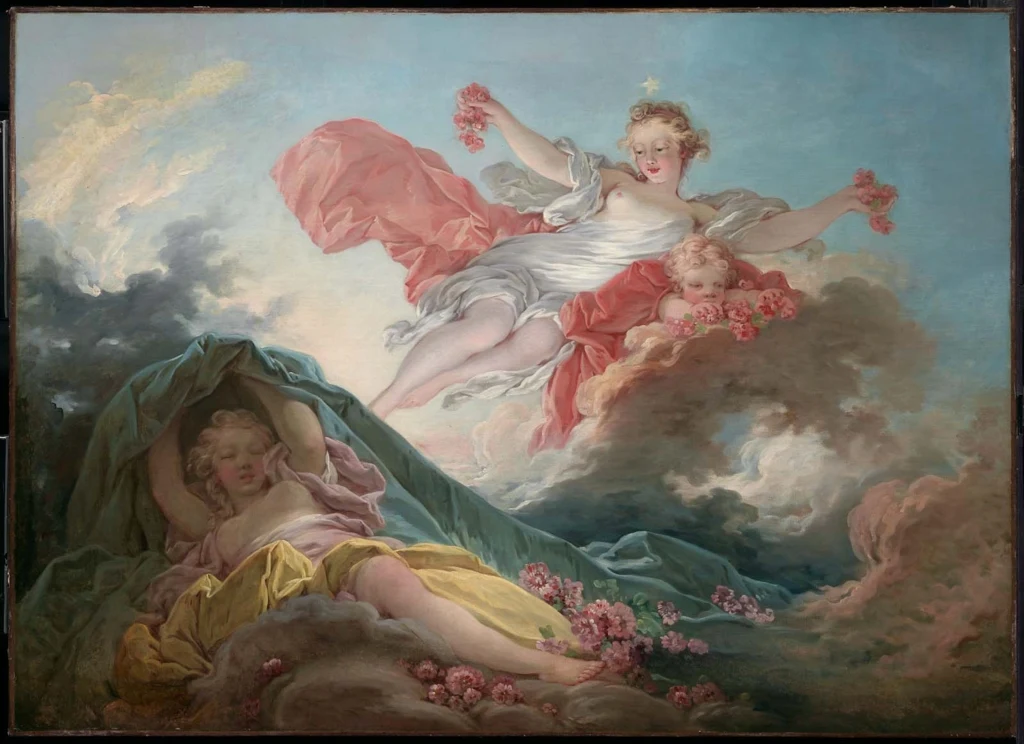
In the Paris townhouses of the 1750s a painting was often part of the wall. Carved wooden panelling ran round the room, and above the doors it left curved spaces for pictures made to fit them. This canvas was one of those. Its long, low format, and the way we look up at the figures from below, show that it was meant to hang high over a doorway. Fragonard painted it around 1755, when he was in his early 20s and still a student. Aurora, goddess of the dawn, scatters rose petals from the morning sky onto the sleeping figure of Night, a play on Homer's rosy-fingered dawn. It probably had a partner, Diana and Endymion, now in the National Gallery of Art in Washington, with the moon goddess answering the dawn. In the 19th century the canvas was taken out of its setting and squared off to hang as an ordinary gallery picture. Look along the edges and you can still make out the original scalloped outline and the pieces added to fill the corners.