Erasmus Quellinus II · PD
Bacchus and Ariadne
Details
The story
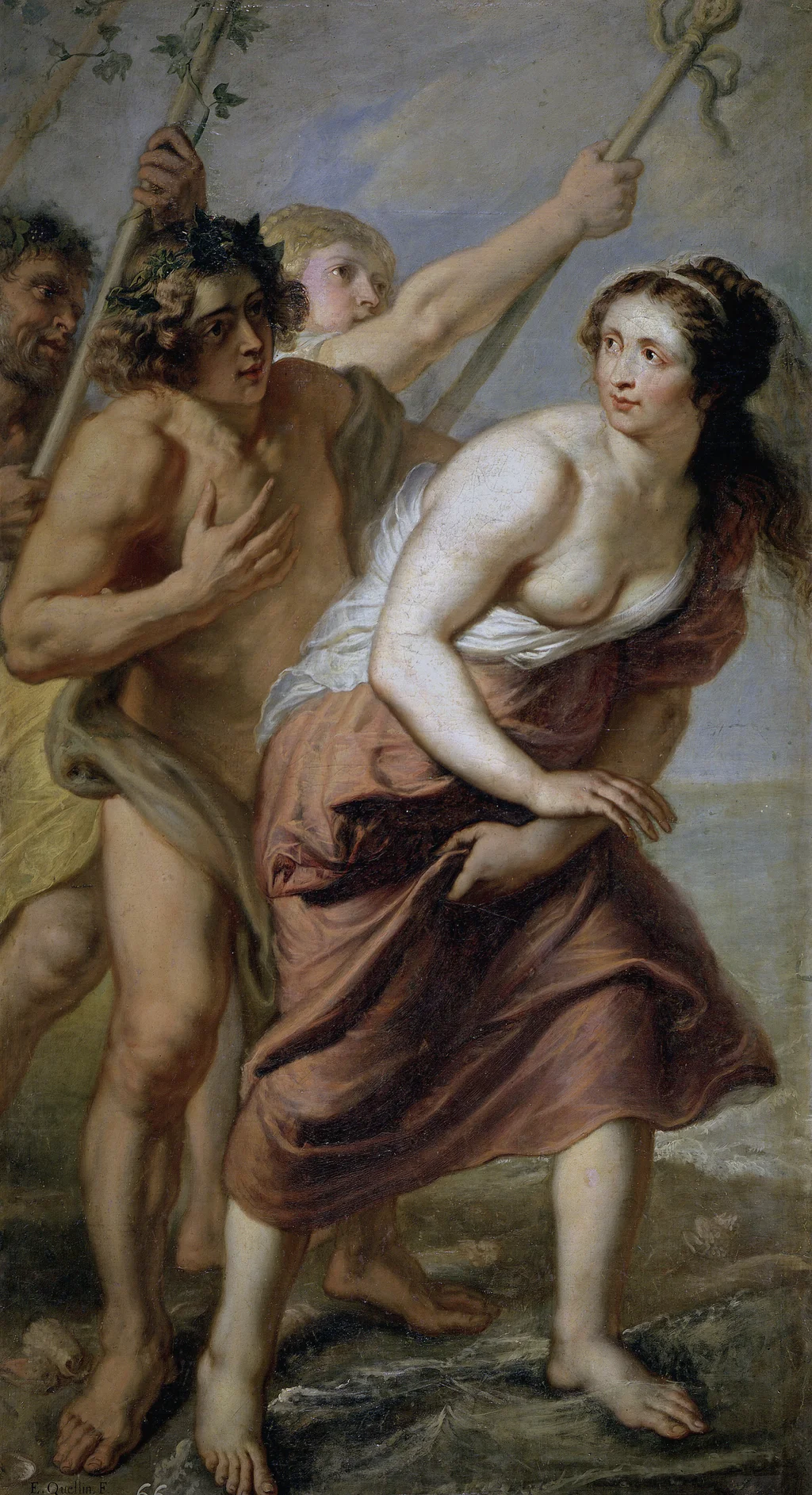
The canvas is 180 centimetres high and only 95 wide, and the two figures had to be stacked into that strip. Titian had already painted the pair meeting on Naxos, where Bacchus finds Ariadne after Theseus has sailed away without her. Svetlana Alpers argued that the scene here comes from a later passage, in Ovid's Fasti, with Ariadne in tears accusing the god of doing to her exactly what Theseus did. He has come up behind her while she is still speaking, and the painting catches the moment he takes hold of her and dries her face. Her pose follows a description by Philostratus, a Greek writer who set down a whole gallery of imaginary paintings in words, with the breast bare to the waist, the head tipped back and one hand keeping the cloak from blowing away. Erasmus Quellinus painted it between 1636 and 1638 after a small panel by Rubens now in Rotterdam, and turned her head a little less far than the sketch does.