Capuchin Monk
Details
The story
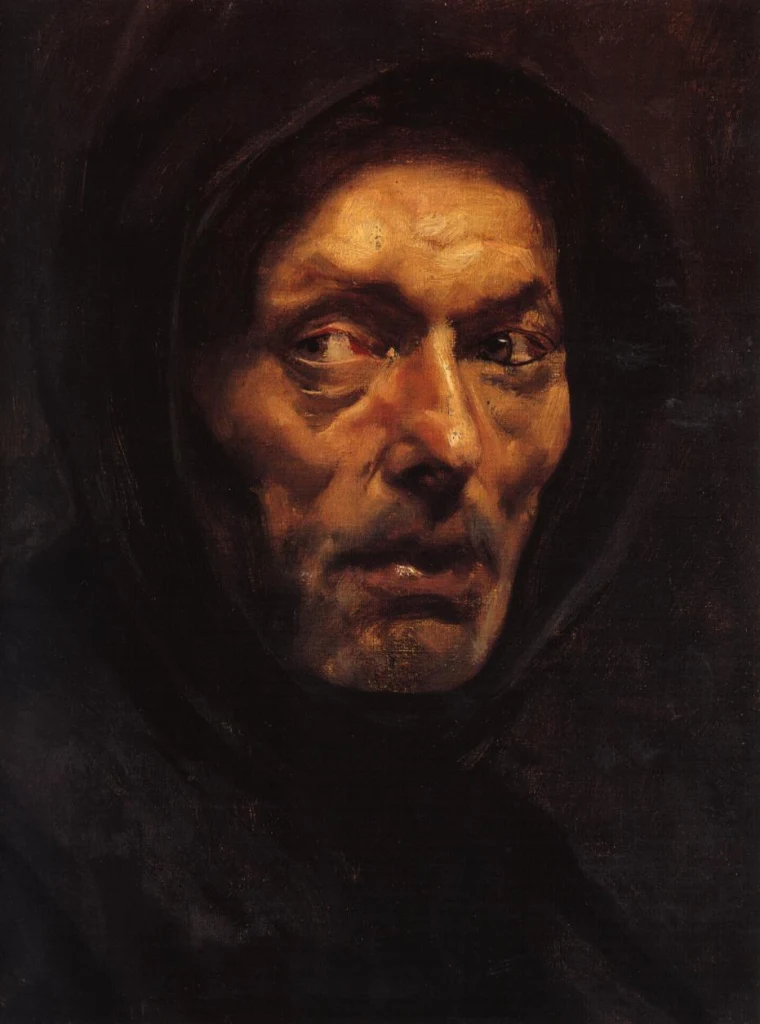
A small painting, 37 by 31 centimetres, not much bigger than a sheet of writing paper. The sitter is a Capuchin, a friar of the branch of the Franciscans founded in Italy in the 16th century and recognised everywhere by the long pointed hood sewn to the habit. The brown of that habit is where the word cappuccino later came from.
Gyzis set the dark hood against the face and let light do the work, so the lit planes of forehead and cheek and two small catchlights in the eyes carry the whole thing. The Greek art historian Giannis Papaioannou called it an anatomy of the soul rather than a portrait, and rated it the clearest example of what the painter could do with light and shade.
No date has been recorded for the work. The Capuchins were a normal part of the city where Gyzis spent his working life: they had been back in Munich since the 1820s, and in the 1890s they built their church of Saint Anton in the Ludwigsvorstadt quarter.