Peter Paul Rubens / Frans Snyders · PD
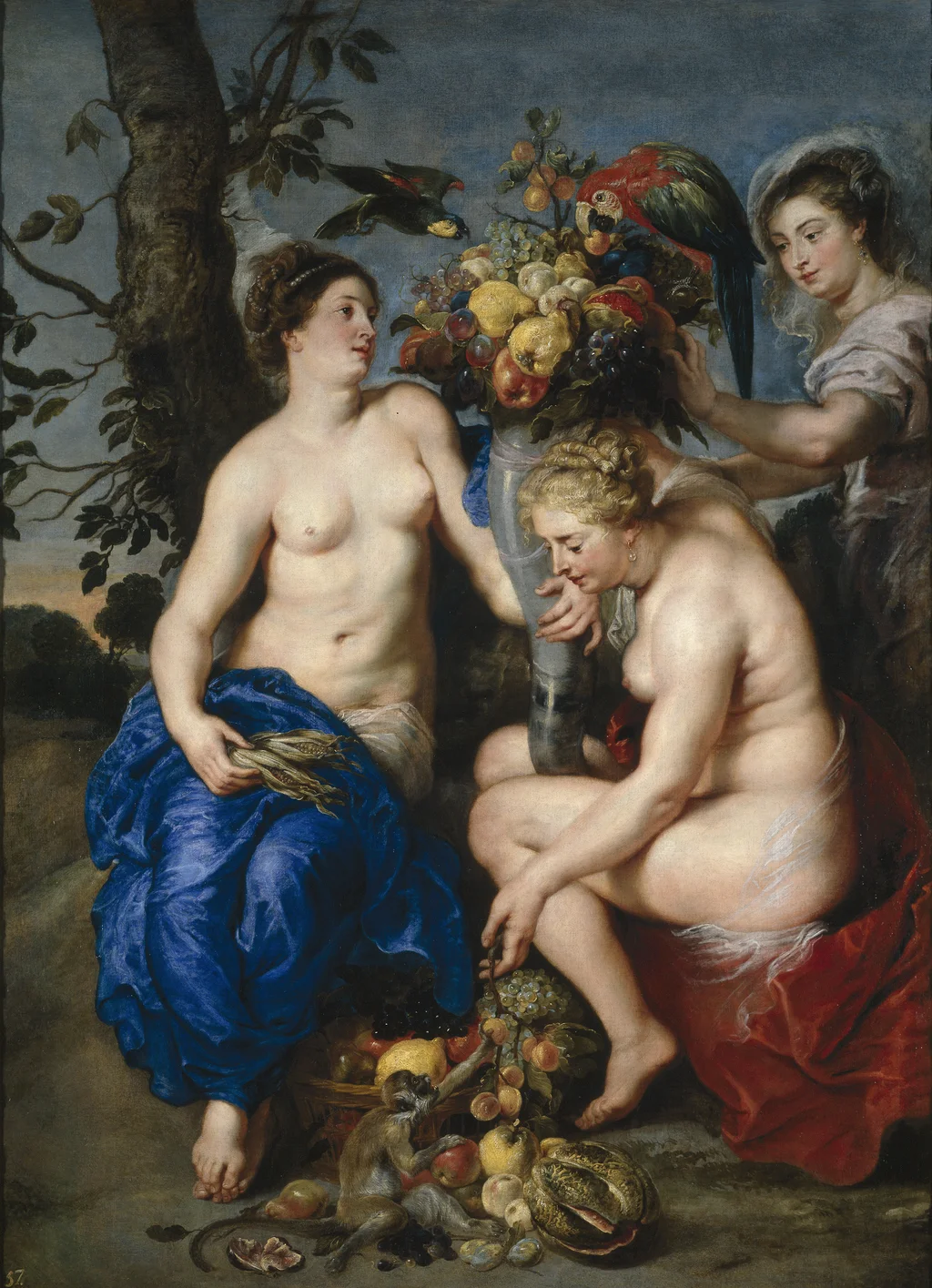
Ceres and Two Nymphs
Details
The story
The three women here have changed names more often than most sitters. The Alcázar inventory drawn up after the death of Charles II calls them simply nymphs with a cornucopia of flowers and fruit, hanging in the Hall of Mirrors. After the palace burned in 1734 and the canvas was carried across to the armoury, the clerk wrote down the goddess Ceres. By the turn of that century, at the Academia de San Fernando, it had become Ceres and Pomona with the symbol of Abundance. The royal inventory of 1834 gives up on names and calls them three beautiful women holding the cornucopia, by then in the Sala Reservada, the closed room where pictures of nudes were kept. The Prado now catalogues the canvas as three nymphs with a cornucopia, painted between 1615 and 1617 by Rubens with Frans Snyders, who did the fruit and the animals. The museum's own 19th-century catalogue noticed one of them, a monkey sitting in the basket of fruit at their feet.