Cimon and Iphigenia
Details
The story
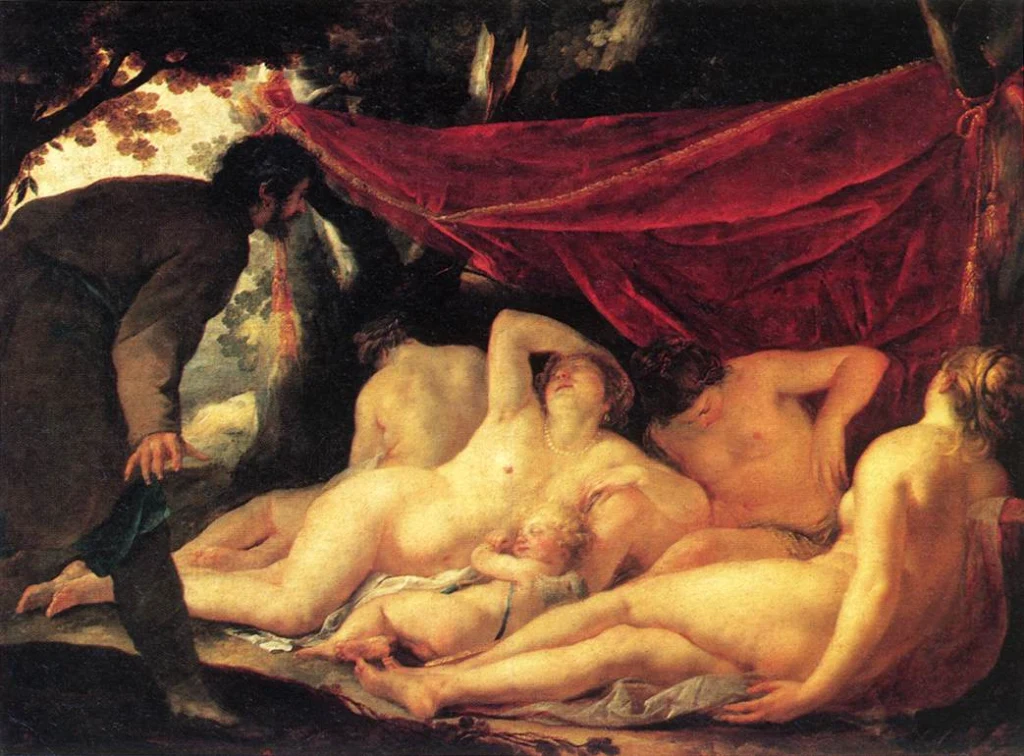
The story comes from Boccaccio's Decameron. On Cyprus there lived a young man named Cimon, handsome but so coarse and dull that people treated him as a simpleton. Wandering through the countryside one day, he came upon a girl, Iphigenia, asleep by a spring with two companions and a servant, lightly dressed after bathing, and the sight of her changed him. Love made him learn manners, letters and music, and within four years he was the most accomplished young man on the island.
Jacques Blanchard painted it around 1629, while he was working in Lyon, and he took liberties. The spring is gone, there are four sleeping women where Boccaccio has a girl, two companions and a servant, and Cupid has been added with his wings and bow. In 1961 the art historian Charles Sterling took the woman with pearls in her hair for Venus and renamed the picture Venus and the Graces Surprised by a Mortal. The Louvre has kept the old title, because apart from Cupid no figure carries an attribute and Sterling's subject appears in no ancient text. The writer Charles Perrault recorded that in Lyon Blanchard painted pictures for local collectors, most of them of naked women.